PUBLISHER: Mordor Intelligence | PRODUCT CODE: 2113871

PUBLISHER: Mordor Intelligence | PRODUCT CODE: 2113871
North America Freeze Dried Products - Market Share Analysis, Industry Trends & Statistics, Growth Forecasts (2026 - 2031)
According to Mordor Intelligence, the North America freeze-dried products market size in 2026 is estimated at USD 13.64 billion, growing from the 2025 value of USD 12.83 billion, with 2031 projections showing USD 18.54 billion, growing at 6.33% CAGR over 2026-2031.
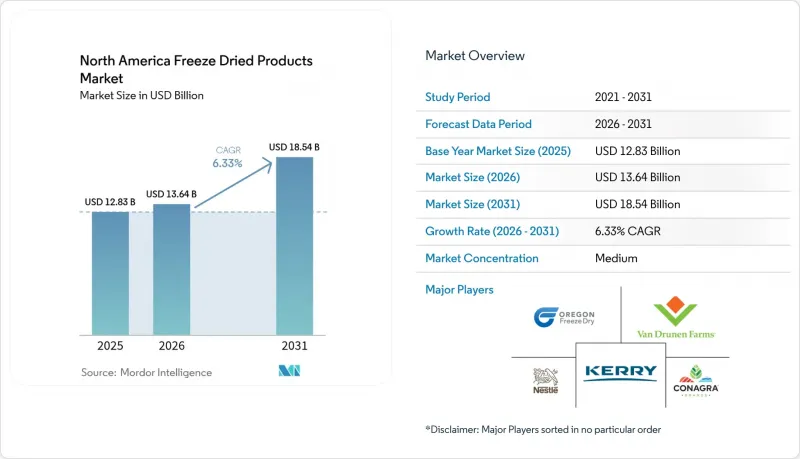
This report is Segmented by Product Type (Fruits, Vegetables, Meat/Seafood, Dairy, Beverages, Prepared Meals, Pet Foods), Nature (Conventional, Organic), Distribution Channel (Supermarket/Hypermarket, Convenience Stores, Online Retail, Other Channels), and Geography (United States, Canada, Mexico, Rest of North America). Market Forecasts are Provided in Terms of Value (USD).
North America Freeze Dried Products Market Trends and Insights
Rising demand for convenient shelf-stable foods
Consumers are increasingly opting for ambient products that reduce spoilage and facilitate quick meal preparation, trading them for fresh and frozen items. Freeze-dried fruits and entrees boast a remarkable 25-30 year shelf life, help households cut food waste by up to 22%, and are 80-90% lighter than their hydrated counterparts, making them highly convenient for storage and transportation. Regions like the Gulf Coast and those prone to wildfires are purchasing 20-25% more per capita, underscoring the heightened emphasis on disaster preparedness, as these products provide a reliable food source during emergencies. The U.S. Army's endorsement of freeze-dried ration packs bolsters its credibility in civilian markets, as it highlights their practicality and durability under extreme conditions. Retailers are weaving this "tactical nutrition" theme into their marketing strategies, ensuring that baseline demand remains resilient against the usual grocery market fluctuations while appealing to consumers' growing interest in long-term food security and convenience.
Growing preference for clean-label nutrient-retaining products
Freeze-drying, a method that preserves up to 98% of key micronutrients, stands out as superior to both air and spray-drying techniques due to its ability to retain nutritional value and extend shelf life. Starting in 2026, Canada's new front-of-pack regulations will penalize products high in sugar and sodium, aiming to promote healthier food choices. This regulatory shift is steering formulators towards incorporating freeze-dried ingredients, which align with these health-focused standards. Research from Cornell University highlights the dairy industry's potential, suggesting brands can now substitute artificial electrolytes with natural minerals derived from whey permeate, enhancing product appeal and nutritional value. Additionally, the Canada-Mexico Organic Equivalency Arrangement's extension is reducing cross-border certification costs, simplifying trade processes, and leading to a surge in organic product adoption. Furthermore, younger, health-conscious consumers are increasingly associating freeze-dried products with wellness, recognizing their nutritional benefits and convenience. This trend is expanding their appeal beyond traditional emergency or camping uses, positioning freeze-dried products as a staple in everyday health-conscious lifestyles.
High capital and energy costs inflate retail pricing
Starting at around USD 500,000 per chamber, equipment packages contribute significantly to total project costs, which can exceed USD 10 million for a mid-sized 10,000 sq ft plant. With electricity consumption ranging from 1.5 to 2 kWh per kilogram, power expenses account for approximately one-fifth of the finished goods cost, making energy efficiency a critical factor in operational profitability. Seasonal demand fluctuations result in capacity utilization dropping below 60%, which increases overhead costs per unit. This, in turn, keeps strawberry shelf prices between USD 18 and 24 per pound, three times the price of air-dried equivalents, thereby limiting affordability for consumers. Shepherd Boy Farms' USD 50 million investment in Indiana highlights the importance of achieving scale to reach breakeven. This requirement for substantial capital investment discourages new entrants and reinforces high barriers to entry in the market.
Other drivers and restraints analyzed in the detailed report include:
- Expansion of e-commerce and D2C distribution
- Retail private-label investment in premium freeze-dried SKUs
- Competition from cheaper dehydrated/frozen substitutes
For complete list of drivers and restraints, kindly check the Table Of Contents.
Segment Analysis
In 2025, freeze-dried fruits captured a 33.58% share of North America's freeze-dried products market revenue, buoyed by robust demand from cereals, snack bars, and confectionery products. By 2031, this segment is set to contribute an additional USD 1.82 billion, thanks to rapid-cycle technology that narrows the cost gap with air-dried alternatives. Leading the SKU counts are strawberry, raspberry, and mango, while apple and pineapple take the lead in bulk orders for bakery mixes. This dominance underscores the familiar taste profiles and established processing methods of these fruits, with strawberries, raspberries, and pineapples particularly favored for their freeze-drying attributes.
While pet foods start from a smaller base, they are poised to outstrip all other segments with an impressive 10.62% CAGR. This surge is driven by pet owners' readiness to spend USD 3-5 per ounce on raw toppers that tout "ancestral nutrition." In a testament to this burgeoning market, Shepherd Boy Farms and Petsource by Scoular poured in a combined USD 125 million for capacity expansions in 2024-2025. Such investments underscore a robust institutional confidence in the pet nutrition sector's growth. The market's diversification, bolstered by steady volumes from vegetables, meat, seafood, and dairy processing lines, ensures stability and mitigates over-reliance on any single end-use.
Complete Report Scope:
- By Product Type
- Freeze-Dried Fruits
- Strawberry
- Raspberry
- Pineapple
- Apple
- Mango
- Other Fruits
- Freeze-Dried Vegetables
- Pea
- Corn
- Carrot
- Potato
- Mushroom
- Other Vegetables
- Freeze-Dried Meat and Seafood
- Freeze-Dried Dairy Products
- Freeze-Dried Beverages
- Prepared Meals
- Pet Foods
- Freeze-Dried Fruits
- By Nature
- Conventional
- Organic
- By Distribution Channel
- Supermarket/Hypermarket
- Convenience Stores
- Online Retail Stores
- Other Distribution Channels
- By Geography
- United States
- Canada
- Mexico
- Rest of North America
List of Companies Covered in this Report:
- Nestle S.A.
- Kerry Group plc
- Conagra Brands Inc.
- OFD Foods LLC (Mountain House)
- Van Drunen Farms
- European Freeze Dry Ltd.
- Mercer Foods LLC
- Freeze-Dry Foods Ltd. (Canada)
- Thrive Life LLC
- Harmony House Foods Inc.
- Ajinomoto Co. Inc.
- Kanegrade Ltd.
- Chaucer Foods Ltd.
- Nuts.com
- Stella & Chewy's
- Vital Essentials Raw
- Champion Petfoods
- Nagatanien Holdings Co. Ltd.
- Asahi Group Holdings
- Graham Partners
Additional Benefits:
- The market estimate (ME) sheet in Excel format
- 3 months of analyst support
TABLE OF CONTENTS
1 INTRODUCTION
- 1.1 Study Assumptions and Market Definition
- 1.2 Scope of the Study
2 RESEARCH METHODOLOGY
3 EXECUTIVE SUMMARY
4 MARKET LANDSCAPE
- 4.1 Market Overview
- 4.2 Market Drivers
- 4.2.1 Rising demand for convenient shelf-stable foods
- 4.2.2 Growing preference for clean-label nutrient-retaining products
- 4.2.3 Expansion of e-commerce and D2C distribution
- 4.2.4 Retail private-label investment in premium freeze-dried SKUs
- 4.2.5 Continuous freeze-drying cuts energy cost, enabling mid-tier pricing
- 4.2.6 U.S. military shift to lighter ration packs stimulates local sourcing
- 4.3 Market Restraints
- 4.3.1 High capital and energy costs inflate retail pricing
- 4.3.2 Competition from cheaper dehydrated/frozen substitutes
- 4.3.3 2025 U.S. tariffs on imported machinery and barrier films
- 4.3.4 Volatile prices for high-brix fruits strain processor margins
- 4.4 Consumer Behavior Analysis
- 4.5 Regulatory Landscape
- 4.6 Porter's Five Forces
- 4.6.1 Bargaining Power of Suppliers
- 4.6.2 Bargaining Power of Buyers
- 4.6.3 Threat of New Entrants
- 4.6.4 Threat of Substitutes
- 4.6.5 Competitive Rivalry
5 MARKET SIZE AND GROWTH FORECASTS (VALUE)
- 5.1 By Product Type
- 5.1.1 Freeze-Dried Fruits
- 5.1.1.1 Strawberry
- 5.1.1.2 Raspberry
- 5.1.1.3 Pineapple
- 5.1.1.4 Apple
- 5.1.1.5 Mango
- 5.1.1.6 Other Fruits
- 5.1.2 Freeze-Dried Vegetables
- 5.1.2.1 Pea
- 5.1.2.2 Corn
- 5.1.2.3 Carrot
- 5.1.2.4 Potato
- 5.1.2.5 Mushroom
- 5.1.2.6 Other Vegetables
- 5.1.3 Freeze-Dried Meat and Seafood
- 5.1.4 Freeze-Dried Dairy Products
- 5.1.5 Freeze-Dried Beverages
- 5.1.6 Prepared Meals
- 5.1.7 Pet Foods
- 5.1.1 Freeze-Dried Fruits
- 5.2 By Nature
- 5.2.1 Conventional
- 5.2.2 Organic
- 5.3 By Distribution Channel
- 5.3.1 Supermarket/Hypermarket
- 5.3.2 Convenience Stores
- 5.3.3 Online Retail Stores
- 5.3.4 Other Distribution Channels
- 5.4 By Geography
- 5.4.1 United States
- 5.4.2 Canada
- 5.4.3 Mexico
- 5.4.4 Rest of North America
6 COMPETITIVE LANDSCAPE
- 6.1 Market Concentration
- 6.2 Strategic Moves
- 6.3 Market Share Analysis
- 6.4 Company Profiles (includes Global level Overview, Market level overview, Core Segments, Financials as available, Strategic Information, Market Rank/Share for key companies, Products and Services, and Recent Developments)
- 6.4.1 Nestle S.A.
- 6.4.2 Kerry Group plc
- 6.4.3 Conagra Brands Inc.
- 6.4.4 OFD Foods LLC (Mountain House)
- 6.4.5 Van Drunen Farms
- 6.4.6 European Freeze Dry Ltd.
- 6.4.7 Mercer Foods LLC
- 6.4.8 Freeze-Dry Foods Ltd. (Canada)
- 6.4.9 Thrive Life LLC
- 6.4.10 Harmony House Foods Inc.
- 6.4.11 Ajinomoto Co. Inc.
- 6.4.12 Kanegrade Ltd.
- 6.4.13 Chaucer Foods Ltd.
- 6.4.14 Nuts.com
- 6.4.15 Stella & Chewy's
- 6.4.16 Vital Essentials Raw
- 6.4.17 Champion Petfoods
- 6.4.18 Nagatanien Holdings Co. Ltd.
- 6.4.19 Asahi Group Holdings
- 6.4.20 Graham Partners
7 MARKET OPPORTUNITIES AND FUTURE OUTLOOK

