PUBLISHER: Mordor Intelligence | PRODUCT CODE: 2114309

PUBLISHER: Mordor Intelligence | PRODUCT CODE: 2114309
MEA Functional Beverages - Market Share Analysis, Industry Trends & Statistics, Growth Forecasts (2026 - 2031)
According to Mordor Intelligence, the Middle East and Africa functional beverages market size was valued at USD 7.21 billion in 2025 and estimated to grow from USD 7.64 billion in 2026 to reach USD 10.2 billion by 2031, at a CAGR of 5.92% during the forecast period (2026-2031).
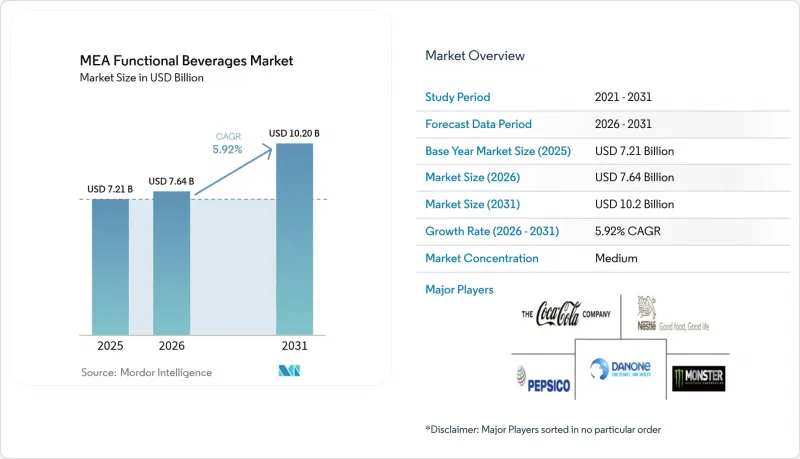
This report is Segmented by Product Type (Energy Drinks, Sports Drinks, Fortified Juices, and More), Packaging Type (PET/Glass Bottles, Cans, Tetra Packs, and Others), Distribution Channel (Supermarkets/Hypermarkets, Convenience Stores, Specialty Health Stores, Online Retailers, and Other Distribution Channels), and Geography. The Market Forecasts are Provided in Terms of Value (USD).
MEA Functional Beverages Market Trends and Insights
Growing Health Awareness and Rising Obesity Rate
The Middle East and Africa functional beverages market is primarily driven by increasing health awareness and rising obesity rates across the region. Consumers are seeking products that offer both refreshment and functional benefits, including weight management, improved metabolism, and disease prevention. This health consciousness is increasing the demand for beverages fortified with vitamins, minerals, proteins, and other beneficial ingredients that address specific nutritional requirements and support healthy lifestyles. According to the World Obesity Federation, as of 2024, over two-thirds of South African women, 30% of men, and a significant proportion of children are experiencing obesity or overweight conditions, presenting a major public health challenge . This high prevalence of obesity has increased consumer awareness about nutrition and lifestyle choices, driving a shift from traditional sugary beverages to healthier functional alternatives.
Halal-certified functional formulations gaining traction
Halal certification has become a significant growth driver in the Middle East and Africa functional beverages market. The certification ensures functional beverages comply with religious dietary requirements, building consumer trust and acceptance. Beyond religious compliance, halal certification indicates quality, safety, and ethical sourcing practices, meeting consumer demands for transparent and authentic health products. Companies increasingly use halal certification as a market differentiator to align with regional cultural and religious preferences. For example, iPRO entered the Saudi Arabian market in February 2025 through a partnership with Al Rabie, a trusted regional brand. The iPRO Hydrate products display the Al Rabie logo and carry halal certification, demonstrating religious compliance and strengthening consumer confidence. This strategic approach shows how companies use localized, culturally aligned formulations to expand their presence in the Middle East and Africa functional beverages market.
Intense Market Competition
The Middle East and Africa functional beverages market faces growth constraints due to intense competition among diverse market participants. The market comprises global corporations competing with local and regional companies. This competitive environment creates downward pressure on prices, accelerates innovation requirements, and demands significant marketing investments, making market entry and growth difficult for smaller companies. Established companies leverage their advantages in brand recognition, distribution networks, and financial resources to maintain market position through promotional activities and frequent product launches. The market's saturation with similar products challenges differentiation efforts, requiring companies to increase research and development investments for creating distinctive formulations that meet changing consumer needs. This competitive environment affects profit margins and market expansion, particularly for companies without sufficient scale or resources.
Other drivers and restraints analyzed in the detailed report include:
- Sports and Fitness Culture Expansion
- Convenience and on-the-go demand
- Stringent Regulatory Compliance
For complete list of drivers and restraints, kindly check the Table Of Contents.
Segment Analysis
In 2025, energy drinks maintained a firm hold on the Middle East and Africa functional beverages market, commanding a 42.68% market share, establishing their position as the leading product type in the region. This dominance stems from a strong appeal among diverse consumers, particularly younger demographics seeking immediate energy boosts and enhanced mental and physical performance. The rapid lifestyle changes in the region have increased demand for convenient, ready-to-consume energy beverages that provide quick revitalization during busy routines. Energy drinks also benefit from their association with improved focus, stamina, and alertness, aligning with consumer demands for enhanced productivity and active lifestyles.
Protein-based drinks are emerging as the fastest-growing segment in the Middle East and Africa functional beverages market, with a projected CAGR of 6.58% through 2031. This growth is driven by health, lifestyle, and demographic trends. The increasing consumer focus on fitness and body aesthetics has generated strong demand for convenient, high-protein nutrition formats, including ready-to-drink (RTD) protein shakes and fortified beverages. The growing adoption of plant-based and alternative protein sources within protein drinks reflects consumer preferences for clean-label, natural, and sustainable products. Formulation innovations using whey, pea protein, soy, and collagen have expanded the appeal of protein-based drinks to a broader demographic, including vegetarians, elderly consumers, and wellness-focused individuals.
Complete Report Scope:
- By Product Type
- Energy Drinks
- Sports Drinks
- Fortified Juices
- Electrolyte Drinks
- Fermented Drinks
- Protein-Based Drinks
- Others
- By Packaging Type
- PET/Glass Bottles
- Cans
- Tetra Packs
- Others
- By Distribution Channel
- Supermarkets/Hypermarkets
- Convenience Stores
- Specialty Health Stores
- Online Retailers
- Other Distribution Channel
- By Geography
- South Africa
- Saudi Arabia
- United Arab Emirates
- Nigeria
- Egypt
- Morocco
- Turkey
- Rest of Middle East and Africa
List of Companies Covered in this Report:
- Nestle S.A.
- PepsiCo Inc.
- The Coca-Cola Company
- Monster Beverage Corporation
- Danone S.A.
- Red Bull GmbH
- Aujan Coca-Cola Beverages Company
- Lucozade Ribena Suntory
- Celsius Holdings Inc.
- Herbalife International of America Inc.
- Mutalo Group
- Kingsley Beverages
- Hell Energy
- Gorilla Energy
- Almarai Co.
- Yakult Honsha
- Viju Industries Nigeria Ltd.
- Sapporo Holdings
- Keurig Dr Pepper
- iPRO Sport Distribution Ltd.
Additional Benefits:
- The market estimate (ME) sheet in Excel format
- 3 months of analyst support
TABLE OF CONTENTS
1 INTRODUCTION
- 1.1 Study Assumptions and Market Definition
- 1.2 Scope of the Study
2 RESEARCH METHODOLOGY
3 EXECUTIVE SUMMARY
4 MARKET LANDSCAPE
- 4.1 Market Overview
- 4.2 Market Drivers
- 4.2.1 Growing health awareness and rising obesity rate
- 4.2.2 Halal-certified functional formulations gaining traction
- 4.2.3 Sports and fitness culture expansion
- 4.2.4 Convenience and on-the-go demand
- 4.2.5 Technological advancements in formulation and packaging
- 4.2.6 Cultural openness to wellness and global trends
- 4.3 Market Restraints
- 4.3.1 Intense market competition
- 4.3.2 Stringent regulatory compliance
- 4.3.3 High production and distribution costs
- 4.3.4 Awareness gaps and educational barriers
- 4.4 Consumer Behaviour Analysis
- 4.5 Regulatory Landscape
- 4.6 Technological Outlook
- 4.7 Porter's Five Forces Analysis
- 4.7.1 Threat of New Entrants
- 4.7.2 Bargaining Power of Buyers
- 4.7.3 Bargaining Power of Suppliers
- 4.7.4 Threat of Substitutes
- 4.7.5 Intensity of Competitive Rivalry
5 MARKET SIZE AND GROWTH FORECASTS (VALUE)
- 5.1 By Product Type
- 5.1.1 Energy Drinks
- 5.1.2 Sports Drinks
- 5.1.3 Fortified Juices
- 5.1.4 Electrolyte Drinks
- 5.1.5 Fermented Drinks
- 5.1.6 Protein-Based Drinks
- 5.1.7 Others
- 5.2 By Packaging Type
- 5.2.1 PET/Glass Bottles
- 5.2.2 Cans
- 5.2.3 Tetra Packs
- 5.2.4 Others
- 5.3 By Distribution Channel
- 5.3.1 Supermarkets/Hypermarkets
- 5.3.2 Convenience Stores
- 5.3.3 Specialty Health Stores
- 5.3.4 Online Retailers
- 5.3.5 Other Distribution Channel
- 5.4 By Geography
- 5.4.1 South Africa
- 5.4.2 Saudi Arabia
- 5.4.3 United Arab Emirates
- 5.4.4 Nigeria
- 5.4.5 Egypt
- 5.4.6 Morocco
- 5.4.7 Turkey
- 5.4.8 Rest of Middle East and Africa
6 COMPETITIVE LANDSCAPE
- 6.1 Market Concentration
- 6.2 Strategic Moves
- 6.3 Market Share Analysis
- 6.4 Company Profiles (includes Global level Overview, Market level overview, Core Segments, Financials as available, Strategic Information, Market Rank/Share for key companies, Products and Services, and Recent Developments)
- 6.4.1 Nestle S.A.
- 6.4.2 PepsiCo Inc.
- 6.4.3 The Coca-Cola Company
- 6.4.4 Monster Beverage Corporation
- 6.4.5 Danone S.A.
- 6.4.6 Red Bull GmbH
- 6.4.7 Aujan Coca-Cola Beverages Company
- 6.4.8 Lucozade Ribena Suntory
- 6.4.9 Celsius Holdings Inc.
- 6.4.10 Herbalife International of America Inc.
- 6.4.11 Mutalo Group
- 6.4.12 Kingsley Beverages
- 6.4.13 Hell Energy
- 6.4.14 Gorilla Energy
- 6.4.15 Almarai Co.
- 6.4.16 Yakult Honsha
- 6.4.17 Viju Industries Nigeria Ltd.
- 6.4.18 Sapporo Holdings
- 6.4.19 Keurig Dr Pepper
- 6.4.20 iPRO Sport Distribution Ltd.
7 MARKET OPPORTUNITIES AND FUTURE OUTLOOK

