PUBLISHER: Mordor Intelligence | PRODUCT CODE: 2119370

PUBLISHER: Mordor Intelligence | PRODUCT CODE: 2119370
Cardiometabolic Drugs - Market Share Analysis, Industry Trends & Statistics, Growth Forecasts (2026 - 2031)
According to Mordor Intelligence, the cardiometabolic drugs market size is projected to be USD 323.41 billion in 2025, USD 356.75 billion in 2026, and reach USD 621.60 billion by 2031, growing at a CAGR of 11.75% from 2026 to 2031.
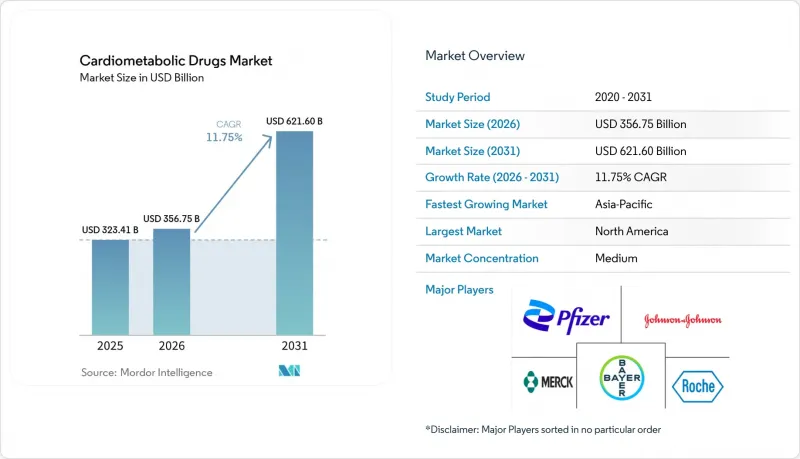
This report is Segmented by Therapeutic Area (Diabetes; Obesity & Weight Management; CVDs; Heart Failure & Cardiorenal; Metabolic Liver Diseases), Drug Class (GLP-1 & Incretin-Based and More), Molecule/Product (Semaglutide and More), Route (Oral and More), Formulation (Tablets & Capsules, and More ), Patient Type (Diabetes, Obesity, and More), Distribution Channel (Hospital and More), and Geography
Global Cardiometabolic Drugs Market Trends and Insights
Rising Cardiometabolic Disease Burden and Treatment Gaps
The cardiometabolic drugs market is supported by a large and growing pool of untreated patients. The International Diabetes Federation reported 589 million adults with diabetes in 2024, including 251.7 million undiagnosed adults. Low- and middle-income countries accounted for 86.9% of undiagnosed cases, which limits early treatment and increases later complications. Cardiovascular disability and mortality increasingly reflect metabolic risks, including high fasting plasma glucose and high body mass index. Diabetes can progress into cardiovascular disease, kidney decline, and metabolic liver disease when treatment is delayed. These linked conditions sustain prescription demand even when pricing pressure affects individual medicines.
Multi-Indication Expansion of Incretin, SGLT2, and Risk-Reduction Therapies
Incretin therapies now reach beyond their original diabetes use and serve wider cardiometabolic care needs. Wegovy received FDA approval for adults with noncirrhotic MASH and moderate-to-advanced liver fibrosis in August 2025. This development brought hepatology into a treatment pathway previously centered on endocrinology and obesity care. SGLT2 inhibitors also remain relevant across type 2 diabetes, heart failure, and chronic kidney disease. Clinical and regulatory developments can expand the number of eligible patients without requiring a new molecular class. Earlier risk reduction may also bring cardiologists and nephrologists into treatment decisions sooner. The cardiometabolic drugs market benefits when evidence and labeling support integrated care across related conditions.
High Out-of-Pocket Costs, Payer Controls, and Persistence Friction
Affordability remains a major limitation for high-cost cardiometabolic treatments, especially for obesity care. Utilization management affected 70% of U.S. exchange-plan drug coverage in 2025. Prior authorization and step therapy can delay treatment starts for eligible patients. Coverage is often more difficult for obesity patients without documented diabetes or cardiovascular disease. Treatment persistence also affects realized demand after a prescription begins. Companies need patient support, clear clinical follow-up, and suitable pricing arrangements to limit early discontinuation. These access constraints can reduce treated volumes despite high underlying clinical need.
Other drivers and restraints analyzed in the detailed report include:
- Oral and Long-Acting Formats Reducing Administration Friction
- Emerging-Market Diagnosis, Coverage, and Reimbursement Expansion
- Generic Erosion, Price Compression, and Product-Security Risk
For complete list of drivers and restraints, kindly check the Table Of Contents.
Segment Analysis
Diabetes held 32.4% of the cardiometabolic drugs market share in 2025, supported by a deep prescription base. Insulin, DPP-4 inhibitors, SGLT2 inhibitors, and GLP-1 agonists remain central to diabetes care. Obesity and weight management is forecast to grow at a 12.5% CAGR through 2031. New incretin labels and broader treatment pathways are bringing obesity care into endocrinology, cardiology, and primary care settings. Incretin therapies have expanded the treatment discussion beyond blood glucose management. Cardiovascular risk reduction and liver disease labels support care across multiple specialties. Cardiovascular diseases remain a large treatment cluster because hypertension and dyslipidemia require sustained medication use. Heart failure and cardiorenal disease are also growing treatment areas because SGLT2 inhibitors serve several related conditions. The cardiometabolic drugs market increasingly reflects overlapping patient needs rather than separate disease categories.
Metabolic liver disease is a smaller commercial area, but recent approvals have increased its relevance. Rezdiffra received conditional authorization in the European Union during August 2025. The UK authorized Rezdiffra for adults with MASH in June 2026. Wegovy also received FDA approval for noncirrhotic MASH during 2025. These events provide 2 approved treatment approaches for MASH. They also bring liver specialists into broader cardiometabolic treatment pathways. Companies with obesity, diabetes, and liver disease programs can use common patient-risk factors across their portfolios. This makes therapeutic-area boundaries less distinct over the forecast period.
Lipid-lowering drugs accounted for 24.3% of the cardiometabolic drugs market size in 2025. Statins retain broad use because they are established, accessible, and used across many health systems. PCSK9 inhibitors and siRNA-based agents support patients with established ASCVD or statin intolerance. GLP-1 and incretin-based therapies are forecast to grow at a 12.5% CAGR through 2031. Their clinical reach now includes obesity, diabetes, cardiovascular risk, and MASH. SGLT2 inhibitors retain a strong role in type 2 diabetes, heart failure, and chronic kidney disease. Insulin and traditional antidiabetic drugs remain important in cost-sensitive markets. Antihypertensives continue to provide high prescription volumes with limited branded pricing power.
Anticoagulants and antiplatelet medicines have different regional revenue paths. Branded apixaban and rivaroxaban face generic pressure in Europe. Their U.S. position remains supported by branded treatment use and broader reimbursement. Drug classes may also compete indirectly when a single medicine addresses several cardiometabolic risk factors. The Lancet described the expanding role of GLP-1 receptor agonists and next-generation incretin therapies in cardiometabolic care. Broader incretin labels could change payer decisions around separate lipid and cardiovascular therapies. This shifts competition from a single-target model toward a wider clinical-value model. The cardiometabolic drugs industry must therefore manage both generic pressure and cross-class competition.
Semaglutide held 8.7% of revenue in 2025, giving it a substantial position among individual molecules. Its use spans injectable and oral formats, type 2 diabetes, obesity, cardiovascular risk reduction, kidney disease, and MASH. Tirzepatide is forecast to grow at a 12.1% CAGR through 2031. Its dual GIP and GLP-1 mechanism supports a distinct clinical position in obesity and diabetes treatment. Empagliflozin and dapagliflozin remain important for heart failure and chronic kidney disease care. Atorvastatin and rosuvastatin continue to contribute high generic volumes. Apixaban and rivaroxaban face price pressure as generic alternatives become available. Molecule-level growth is therefore concentrated in newer therapies while mature molecules sustain broad access.
This concentration increases the importance of manufacturing and product availability. Injectable peptide production requires specialized fill-finish capacity and device assembly. New indication approvals can create demand faster than the supply capacity expands. Companies must invest before a therapy achieves its full commercial scale. Oral small-molecule therapies may use more conventional manufacturing infrastructure. That difference could influence the nature of competition after patent expiry. Product success will depend on clinical evidence, supply reliability, delivery format, and reimbursement. The cardiometabolic drugs market is exposed when a small number of platform molecules carry a large share of new value.
Complete Report Scope:
- By Therapeutic Area
- Diabetes
- Obesity & Weight Management
- Cardiovascular Diseases (Hypertension, Dyslipidemia, ASCVD, Stroke)
- Heart Failure & Cardiorenal Diseases
- Metabolic Liver Diseases (MASH/MASLD)
- By Drug Class
- GLP-1 & Incretin-Based Therapies
- SGLT2 Inhibitors
- Insulin & Traditional Antidiabetic Drugs
- Antihypertensive Drugs
- Lipid-Lowering Drugs
- Anticoagulants & Antiplatelet Drugs
- Other Cardiometabolic Drugs
- By Molecule / Product
- Semaglutide
- Tirzepatide
- Empagliflozin
- Dapagliflozin
- Atorvastatin/Rosuvastatin
- Apixaban/Rivaroxaban
- Other Products
- By Route of Administration
- Oral
- Injectable
- Other Routes
- By Formulation and Dosing Frequency
- Tablets & Capsules
- Prefilled Pens & Autoinjectors
- Vials & Cartridges
- Long-Acting Formulations
- By Patient Type
- Diabetes Patients
- Obesity Patients
- Cardiovascular Disease Patients
- Cardiorenal Disease Patients
- Metabolic Liver Disease Patients
- Pediatric & Geriatric Patients
- By Distribution Channel
- Hospital Pharmacies
- Retail Pharmacies
- Online Pharmacies
- Institutional & Direct Channels
- By Geography
- North America
- United States
- Canada
- Mexico
- Europe
- Germany
- United Kingdom
- France
- Italy
- Spain
- Rest of Europe
- Asia-Pacific
- China
- Japan
- India
- South Korea
- Australia
- Rest of Asia-Pacific
- Middle East and Africa
- GCC
- South Africa
- Rest of Middle East and Africa
- South America
- Brazil
- Argentina
- Rest of South America
- North America
Geography Analysis
North America held 41.3% of the cardiometabolic drugs market share in 2025. The United States combines high medicine prices, broad guideline use, and strong uptake of evidence-based therapies. GLP-1 and SGLT2 medicines benefit from established specialist networks and payer coverage for qualifying patients. Canada uses provincial formulary processes and health technology assessments to manage access. Mexico has a growing private-pay obesity treatment channel as distribution networks develop. U.S. payer management remains a restraint for high-cost medicines. The Inflation Reduction Act also creates a pricing consideration for Medicare and commercial plan benchmarks. North America remains important for branded revenue, even as access controls become stricter.
Europe is the second-largest geographic area for the cardiometabolic drugs market. Germany, the United Kingdom, France, Italy, and Spain account for much of the regional demand. Europe has a large disease burden but lower branded prices than North America. Reimbursement decisions commonly require health technology assessments and evidence of outcomes. Rezdiffra's European authorization in 2025 and UK authorization in 2026 expanded treatment options for MASH. Generic competition is also expected to place pressure on anticoagulant and SGLT2 inhibitor revenue. The region rewards clinical evidence but limits revenue through structured pricing and reimbursement processes.
Asia-Pacific is forecast to grow at a 12.2% CAGR through 2031, the highest geographic rate. China and India provide large diabetes populations and expanding pathways for new treatments. India's Abbott and Novo Nordisk collaboration illustrates the need for broad distribution systems. Japan combines extensive coverage with periodic pricing revisions. Middle East, Africa, and South America remain smaller but expanding areas. Urbanization and dietary change are increasing cardiometabolic risk across Saudi Arabia, South Africa, Brazil, and Argentina. High out-of-pocket costs and cold-chain requirements restrict injectable access outside major urban centers. These areas offer volume potential, but affordability and health-system capacity remain decisive.
List of Companies Covered in this Report:
- Novo Nordisk
- Eli Lilly and Company
- Sanofi
- AstraZeneca
- Boehringer Ingelheim
- Merck
- Bristol-Myers Squibb
- Pfizer
- Novartis
- Bayer
- Amgen
- Abbvie
- Roche
- Gilead Sciences
- Takeda Pharmaceuticals
- Biocon
- Biomarin Pharmaceutical
- Cipla
- Glenmark Pharmaceuticals
Additional Benefits:
- The market estimate (ME) sheet in Excel format
- 3 months of analyst support
TABLE OF CONTENTS
1 INTRODUCTION
- 1.1 Study Assumptions and Market Definition
- 1.2 Scope of the Study
2 RESEARCH METHODOLOGY
3 EXECUTIVE SUMMARY
4 MARKET LANDSCAPE
- 4.1 Market Overview
- 4.2 Market Drivers
- 4.2.1 Rising Cardiometabolic Disease Burden and Treatment Gaps
- 4.2.2 Multi-Indication Expansion of Incretin and SGLT2 Therapies
- 4.2.3 Earlier Risk-Reduction Treatment Enabled by Outcome Trials and Guidelines
- 4.2.4 Emerging-Market Diagnosis and Treatment-Coverage Expansion
- 4.2.5 Oral and Long-Acting Formats Reducing Administration Friction
- 4.2.6 Comorbidity-Linked Reimbursement and Real-World Evidence
- 4.3 Market Restraints
- 4.3.1 High Out-of-Pocket Costs and Payer Utilization Controls
- 4.3.2 Generic Erosion and Therapeutic Price Compression
- 4.3.3 Treatment Discontinuation from Tolerability and Persistence Friction
- 4.3.4 Counterfeit, Compounded and Gray-Market Product Risk
- 4.4 Supply-Chain Analysis
- 4.5 Regulatory Landscape
- 4.6 Technological Outlook
- 4.7 Porters Five Forces Analysis
- 4.7.1 Threat of New Entrants
- 4.7.2 Bargaining Power of Suppliers
- 4.7.3 Bargaining Power of Buyers
- 4.7.4 Threat of Substitutes
- 4.7.5 Competitive Rivalry
5 MARKET SIZE AND GROWTH FORECASTS
- 5.1 By Therapeutic Area
- 5.1.1 Diabetes
- 5.1.2 Obesity & Weight Management
- 5.1.3 Cardiovascular Diseases (Hypertension, Dyslipidemia, ASCVD, Stroke)
- 5.1.4 Heart Failure & Cardiorenal Diseases
- 5.1.5 Metabolic Liver Diseases (MASH/MASLD)
- 5.2 By Drug Class
- 5.2.1 GLP-1 & Incretin-Based Therapies
- 5.2.2 SGLT2 Inhibitors
- 5.2.3 Insulin & Traditional Antidiabetic Drugs
- 5.2.4 Antihypertensive Drugs
- 5.2.5 Lipid-Lowering Drugs
- 5.2.6 Anticoagulants & Antiplatelet Drugs
- 5.2.7 Other Cardiometabolic Drugs
- 5.3 By Molecule / Product
- 5.3.1 Semaglutide
- 5.3.2 Tirzepatide
- 5.3.3 Empagliflozin
- 5.3.4 Dapagliflozin
- 5.3.5 Atorvastatin/Rosuvastatin
- 5.3.6 Apixaban/Rivaroxaban
- 5.3.7 Other Products
- 5.4 By Route of Administration
- 5.4.1 Oral
- 5.4.2 Injectable
- 5.4.3 Other Routes
- 5.5 By Formulation and Dosing Frequency
- 5.5.1 Tablets & Capsules
- 5.5.2 Prefilled Pens & Autoinjectors
- 5.5.3 Vials & Cartridges
- 5.5.4 Long-Acting Formulations
- 5.6 By Patient Type
- 5.6.1 Diabetes Patients
- 5.6.2 Obesity Patients
- 5.6.3 Cardiovascular Disease Patients
- 5.6.4 Cardiorenal Disease Patients
- 5.6.5 Metabolic Liver Disease Patients
- 5.6.6 Pediatric & Geriatric Patients
- 5.7 By Distribution Channel
- 5.7.1 Hospital Pharmacies
- 5.7.2 Retail Pharmacies
- 5.7.3 Online Pharmacies
- 5.7.4 Institutional & Direct Channels
- 5.8 By Geography
- 5.8.1 North America
- 5.8.1.1 United States
- 5.8.1.2 Canada
- 5.8.1.3 Mexico
- 5.8.2 Europe
- 5.8.2.1 Germany
- 5.8.2.2 United Kingdom
- 5.8.2.3 France
- 5.8.2.4 Italy
- 5.8.2.5 Spain
- 5.8.2.6 Rest of Europe
- 5.8.3 Asia-Pacific
- 5.8.3.1 China
- 5.8.3.2 Japan
- 5.8.3.3 India
- 5.8.3.4 South Korea
- 5.8.3.5 Australia
- 5.8.3.6 Rest of Asia-Pacific
- 5.8.4 Middle East and Africa
- 5.8.4.1 GCC
- 5.8.4.2 South Africa
- 5.8.4.3 Rest of Middle East and Africa
- 5.8.5 South America
- 5.8.5.1 Brazil
- 5.8.5.2 Argentina
- 5.8.5.3 Rest of South America
- 5.8.1 North America
6 COMPETITIVE LANDSCAPE
- 6.1 Market Concentration
- 6.2 Market Share Analysis
- 6.3 Company Profiles (includes Global Level Overview, Market Level Overview, Core Segments, Financials as available, Strategic Information, Market Rank/Share, Products and Services, Recent Developments)
- 6.3.1 Novo Nordisk A/S
- 6.3.2 Eli Lilly and Company
- 6.3.3 Sanofi
- 6.3.4 AstraZeneca plc
- 6.3.5 Boehringer Ingelheim International GmbH
- 6.3.6 Merck & Co., Inc.
- 6.3.7 Bristol-Myers Squibb Company
- 6.3.8 Pfizer Inc.
- 6.3.9 Novartis AG
- 6.3.10 Bayer AG
- 6.3.11 Amgen Inc.
- 6.3.12 AbbVie Inc.
- 6.3.13 F. Hoffmann-La Roche Ltd
- 6.3.14 Gilead Sciences, Inc.
- 6.3.15 Takeda Pharmaceutical Company Limited
- 6.3.16 Biocon Limited
- 6.3.17 BioMarin Pharmaceutical Inc.
- 6.3.18 Cipla Limited
- 6.3.19 Glenmark Pharmaceuticals Limited
7 MARKET OPPORTUNITIES AND FUTURE OUTLOOK
- 7.1 White-Space and Unmet-Need Assessment

