
PUBLISHER: Aviation & Defense Market Reports (A&D) | PRODUCT CODE: 2048535

PUBLISHER: Aviation & Defense Market Reports (A&D) | PRODUCT CODE: 2048535
Global SATCOM Market 2026-2036
Global SATCOM Market
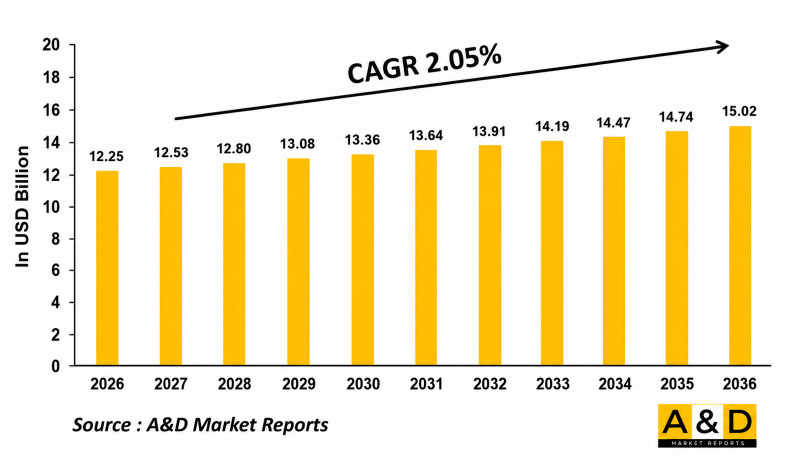
The Global SATCOM Market is estimated at USD 12.25 billion in 2026, projected to grow to USD 15.02 billion by 2036 at a Compound Annual Growth Rate (CAGR) of 2.05% over the forecast period 2026-2036.
1. Introduction
The Global SATCOM Market plays a critical role in enabling secure and reliable communication across military, commercial, maritime, aviation, and government sectors. Satellite communication systems support voice, video, and data transmission over long distances, especially in areas where terrestrial infrastructure is limited or unavailable. Growing demand for uninterrupted connectivity, real-time intelligence sharing, and enhanced communication capabilities is driving the expansion of satellite-based networks worldwide.
The market is witnessing increasing adoption of advanced communication technologies, including high-throughput satellites, low-earth-orbit constellations, and integrated communication platforms. Defense organizations rely heavily on SATCOM systems for command, surveillance, and mission coordination, while commercial industries use them for broadband services, navigation, and remote operations. Rising investments in space infrastructure, digital transformation initiatives, and modernization of defense communication systems continue to strengthen market growth. Increasing global reliance on secure connectivity and resilient communication networks is expected to sustain long-term demand for satellite communication solutions.
2. Technology Impact in Global SATCOM Market
Technological advancements are significantly transforming the Global SATCOM Market by improving communication speed, reliability, security, and coverage. The emergence of high-throughput satellites has enabled faster data transmission and greater bandwidth efficiency, supporting applications such as broadband connectivity, remote operations, and real-time data sharing. Low-earth-orbit satellite constellations are also reshaping the industry by reducing latency and enhancing global coverage for commercial and defense users.
Artificial intelligence and automation technologies are improving satellite network management, predictive maintenance, and signal optimization. Advanced encryption systems and cybersecurity technologies are strengthening communication security against cyber threats and electronic warfare risks. The integration of cloud computing and software-defined networking is enhancing operational flexibility and enabling seamless communication across multiple platforms.
In addition, miniaturized satellite technology and reusable launch systems are reducing deployment costs and expanding market accessibility. These innovations are encouraging governments, telecom providers, and defense organizations to invest in next-generation satellite communication systems capable of supporting future digital and connected ecosystems.
3. Key Drivers in Global SATCOM Market
The growing need for reliable and secure communication infrastructure is one of the primary drivers of the Global SATCOM Market. Governments and defense agencies increasingly depend on satellite communication systems for intelligence gathering, battlefield coordination, surveillance operations, and disaster response activities. Rising geopolitical tensions and modernization of military communication systems are accelerating investments in advanced SATCOM technologies.
Expanding demand for broadband connectivity in remote and underserved regions is another major growth factor. Satellite communication provides essential connectivity in rural locations, offshore operations, maritime routes, and airborne platforms where traditional communication infrastructure remains limited. Increasing digital transformation initiatives across industries are also contributing to market expansion.
The rapid growth of commercial aviation, maritime trade, and connected transportation systems is boosting demand for uninterrupted communication and navigation services. Furthermore, increasing deployment of low-earth-orbit satellites and high-throughput satellite systems is improving communication performance and attracting new investments.
Growing adoption of cloud-based services, Internet of Things applications, and real-time data communication is further driving market demand. Rising government support for space programs and advancements in satellite launch capabilities continue to strengthen the development of the global SATCOM ecosystem.
4. Regional Trends in Global SATCOM Market
North America remains a dominant region in the Global SATCOM Market due to strong defense spending, advanced space infrastructure, and the presence of major satellite communication companies. The region continues to invest heavily in military communication modernization, secure satellite networks, and next-generation space technologies. Growing commercial broadband initiatives and satellite internet projects are also contributing to regional market growth.
Europe is witnessing increased adoption of SATCOM systems for defense, aviation, and maritime applications. Governments across the region are focusing on strengthening secure communication capabilities and improving regional space collaboration programs. Investments in satellite-based connectivity and digital infrastructure are supporting market expansion.
The Asia-Pacific region is emerging as a rapidly growing market driven by increasing defense modernization, expanding telecommunications infrastructure, and rising investments in national space programs. Countries in the region are focusing on enhancing communication resilience, surveillance capabilities, and broadband access for remote areas.
The Middle East and Africa are experiencing growing demand for satellite communication systems in defense, oil and gas, maritime, and remote connectivity applications. Latin America is also gradually adopting SATCOM solutions to improve digital inclusion, disaster management, and communication infrastructure across rural and underserved regions.
5. Key Global SATCOM Market Program
Several major satellite communication programs are shaping the development of the Global SATCOM Market. Governments and defense organizations are investing in advanced military communication satellite systems designed to enhance secure data transmission, surveillance coordination, and operational connectivity across land, air, sea, and space domains. These programs focus on strengthening communication resilience and supporting network-centric warfare capabilities.
Commercial satellite broadband programs are also gaining momentum as companies deploy large satellite constellations to deliver high-speed internet connectivity worldwide. These initiatives aim to improve communication access in remote regions, support digital transformation, and enhance global connectivity infrastructure.
Space agencies and private operators are collaborating on next-generation satellite technologies, including high-throughput satellites, low-earth-orbit communication networks, and software-defined satellite systems. In addition, modernization programs in maritime and aviation communication are encouraging the adoption of advanced SATCOM solutions for navigation, passenger connectivity, and operational efficiency.
Growing public-private partnerships, increased investments in satellite launches, and international cooperation in space communication projects are expected to accelerate innovation and long-term market development across the global SATCOM industry.
Table of Contents
SATCOM Market - Table of Contents
SATCOM Market Report Definition
SATCOM Market Segmentation
By Region
By Platform
By End - User
SATCOM Market Analysis for next 10 Years
The 10-year SATCOM Market analysis would give a detailed overview of SATCOM market growth, changing dynamics, technology adoption overviews and the overall market attractiveness is covered in this chapter.
Market Technologies of SATCOM Market
This segment covers the top 10 technologies that is expected to impact this market and the possible implications these technologies would have on the overall market.
Global SATCOM Market Forecast
The 10-year SATCOM market forecast of this market is covered in detailed across the segments which are mentioned above.
Regional SATCOM Market Trends & Forecast
The regional SATCOM market trends, drivers, restraints and Challenges of this market, the Political, Economic, Social and Technology aspects are covered in this segment. The market forecast and scenario analysis across regions are also covered in detailed in this segment. The last part of the regional analysis includes profiling of the key companies, supplier landscape and company benchmarking. The current market size is estimated based on the normal scenario.
North America
Drivers, Restraints and Challenges
PEST
Market Forecast & Scenario Analysis
Key Companies
Supplier Tier Landscape
Company Benchmarking
Europe
Middle East
APAC
South America
Country Analysis of SATCOM Market
This chapter deals with the key defense programs in this market, it also covers the latest news and patents which have been filed in this market. Country level 10 year market forecast and scenario analysis are also covered in this chapter.
US
Defense Programs
Latest News
Patents
Current levels of technology maturation in this market
Market Forecast & Scenario Analysis
Canada
Italy
France
Germany
Netherlands
Belgium
Spain
Sweden
Greece
Australia
South Africa
India
China
Russia
South Korea
Japan
Malaysia
Singapore
Brazil
Opportunity Matrix for SATCOM Market
The opportunity matrix helps the readers understand the high opportunity segments in this market.
Expert Opinions on SATCOM Market Report
Hear from our experts their opinion of the possible analysis for this market.
Conclusions
About Aviation and Defense Market Reports
List of Tables
- Table 1: 10 Year Market Outlook, 2026-2036
- Table 2: Drivers, Impact Analysis, North America
- Table 3: Restraints, Impact Analysis, North America
- Table 4: Challenges, Impact Analysis, North America
- Table 5: Drivers, Impact Analysis, Europe
- Table 6: Restraints, Impact Analysis, Europe
- Table 7: Challenges, Impact Analysis, Europe
- Table 8: Drivers, Impact Analysis, Middle East
- Table 9: Restraints, Impact Analysis, Middle East
- Table 10: Challenges, Impact Analysis, Middle East
- Table 11: Drivers, Impact Analysis, Apac
- Table 12: Restraints, Impact Analysis, Apac
- Table 13: Challenges, Impact Analysis, Apac
- Table 14: Drivers, Impact Analysis, South America
- Table 15: Restraints, Impact Analysis, South America
- Table 16: Challenges, Impact Analysis, South America
- Table 17: Scenario Analysis, Scenario 1, By Region, 2026-2036
- Table 18: Scenario Analysis, Scenario 1, By Platform 2026-2036
- Table 19: Scenario Analysis, Scenario 1, By End Users, 2026-2036
- Table 20: Scenario Analysis, Scenario 2, By Region, 2026-2036
- Table 21: Scenario Analysis, Scenario 2, By Platform 2026-2036
- Table 22: Scenario Analysis, Scenario 2, By End Users, 2026-2036
List of Figures
- Figure 1: Global Defense SATCOM Market Forecast, 2026-2036
- Figure 2: Global Defense SATCOM Market Forecast, By Region, 2026-2036
- Figure 3: Global Defense SATCOM Market Forecast, By Platform 2026-2036
- Figure 4: Global Defense SATCOM Market Forecast, By End Users, 2026-2036
- Figure 5: North America, Defense SATCOM Market , Market Forecast, 2026-2036
- Figure 6: Europe, Defense SATCOM Market , Market Forecast, 2026-2036
- Figure 7: Middle East, Defense SATCOM Market , Market Forecast, 2026-2036
- Figure 8: Apac, Defense SATCOM Market , Market Forecast, 2026-2036
- Figure 9: South America, Defense SATCOM Market , Market Forecast, 2026-2036
- Figure 10: United States, Defense SATCOM Market , Region Maturation, 2026-2036
- Figure 11: United States, Defense SATCOM Market , Market Forecast, 2026-2036
- Figure 12: Canada, Defense SATCOM Market , Region Maturation, 2026-2036
- Figure 13: Canada, Defense SATCOM Market , Market Forecast, 2026-2036
- Figure 14: Italy, Defense SATCOM Market , Region Maturation, 2026-2036
- Figure 15: Italy, Defense SATCOM Market , Market Forecast, 2026-2036
- Figure 16: France, Defense SATCOM Market , Region Maturation, 2026-2036
- Figure 17: France, Defense SATCOM Market , Market Forecast, 2026-2036
- Figure 18: Germany, Defense SATCOM Market , Region Maturation, 2026-2036
- Figure 19: Germany, Defense SATCOM Market , Market Forecast, 2026-2036
- Figure 20: Netherlands, Defense SATCOM Market , Region Maturation, 2026-2036
- Figure 21: Netherlands, Defense SATCOM Market , Market Forecast, 2026-2036
- Figure 22: Belgium, Defense SATCOM Market , Region Maturation, 2026-2036
- Figure 23: Belgium, Defense SATCOM Market , Market Forecast, 2026-2036
- Figure 24: Spain, Defense SATCOM Market , Region Maturation, 2026-2036
- Figure 25: Spain, Defense SATCOM Market , Market Forecast, 2026-2036
- Figure 26: Sweden, Defense SATCOM Market , Region Maturation, 2026-2036
- Figure 27: Sweden, Defense SATCOM Market , Market Forecast, 2026-2036
- Figure 28: Brazil, Defense SATCOM Market , Region Maturation, 2026-2036
- Figure 29: Brazil, Defense SATCOM Market , Market Forecast, 2026-2036
- Figure 30: Australia, Defense SATCOM Market , Region Maturation, 2026-2036
- Figure 31: Australia, Defense SATCOM Market , Market Forecast, 2026-2036
- Figure 32: India, Defense SATCOM Market , Region Maturation, 2026-2036
- Figure 33: India, Defense SATCOM Market , Market Forecast, 2026-2036
- Figure 34: China, Defense SATCOM Market , Region Maturation, 2026-2036
- Figure 35: China, Defense SATCOM Market , Market Forecast, 2026-2036
- Figure 36: Saudi Arabia, Defense SATCOM Market , Region Maturation, 2026-2036
- Figure 37: Saudi Arabia, Defense SATCOM Market , Market Forecast, 2026-2036
- Figure 38: South Korea, Defense SATCOM Market , Region Maturation, 2026-2036
- Figure 39: South Korea, Defense SATCOM Market , Market Forecast, 2026-2036
- Figure 40: Japan, Defense SATCOM Market , Region Maturation, 2026-2036
- Figure 41: Japan, Defense SATCOM Market , Market Forecast, 2026-2036
- Figure 42: Malaysia, Defense SATCOM Market , Region Maturation, 2026-2036
- Figure 43: Malaysia, Defense SATCOM Market , Market Forecast, 2026-2036
- Figure 44: Singapore, Defense SATCOM Market , Region Maturation, 2026-2036
- Figure 45: Singapore, Defense SATCOM Market , Market Forecast, 2026-2036
- Figure 46: United Kingdom, Defense SATCOM Market , Region Maturation, 2026-2036
- Figure 47: United Kingdom, Defense SATCOM Market , Market Forecast, 2026-2036
- Figure 48: Opportunity Analysis, Defense SATCOM Market , By Region (Cumulative Market), 2026-2036
- Figure 49: Opportunity Analysis, Defense SATCOM Market , By Region (Cagr), 2026-2036
- Figure 50: Opportunity Analysis, Defense SATCOM Market , By Platform Cumulative Market), 2026-2036
- Figure 51: Opportunity Analysis, Defense SATCOM Market , By Platform (Cagr), 2026-2036
- Figure 52: Opportunity Analysis, Defense SATCOM Market , By End Users(Cumulative Market), 2026-2036
- Figure 53: Opportunity Analysis, Defense SATCOM Market , By End Users (Cagr), 2026-2036
- Figure 54: Scenario Analysis, Defense SATCOM Market , Cumulative Market, 2026-2036
- Figure 55: Scenario Analysis, Defense SATCOM Market , Global Market, 2026-2036
- Figure 56: Scenario 1, Defense SATCOM Market , Total Market, 2026-2036
- Figure 57: Scenario 1, Defense SATCOM Market , By Region, 2026-2036
- Figure 58: Scenario 1, Defense SATCOM Market , By Platform 2026-2036
- Figure 59: Scenario 1, Defense SATCOM Market , By End Users, 2026-2036
- Figure 60: Scenario 2, Defense SATCOM Market , Total Market, 2026-2036
- Figure 61: Scenario 2, Defense SATCOM Market , By Region, 2026-2036
- Figure 62: Scenario 2, Defense SATCOM Market , By Platform 2026-2036
- Figure 63: Scenario 2, Defense SATCOM Market , By End Users, 2026-2036
- Figure 64: Company Benchmark, Defense SATCOM Market , 2026-2036

