PUBLISHER: Mordor Intelligence | PRODUCT CODE: 2114353

PUBLISHER: Mordor Intelligence | PRODUCT CODE: 2114353
North America Bath And Shower Products - Market Share Analysis, Industry Trends & Statistics, Growth Forecasts (2026 - 2031)
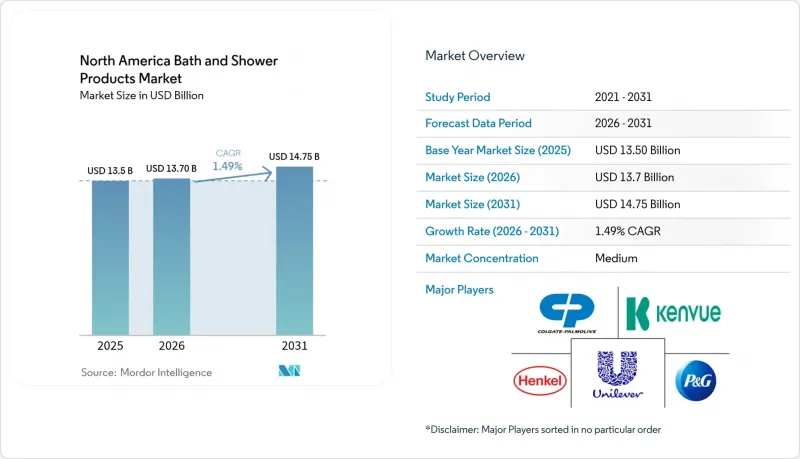
According to Mordor Intelligence, the North America bath and Shower Products market size was valued at USD 13.50 billion in 2025 and estimated to grow from USD 13.70 billion in 2026 to reach USD 14.75 billion by 2031, at a CAGR of 1.49% during the forecast period (2026-2031).
This report is Segmented by Product Type (Bar Soap, Body Wash/Shower Gel, and More), Ingredient (Conventional/Synthetic and Natural/Organic), End User (Kids/Children and Adults), Functionality (Exfoliating, and More), and Distribution Channel (Supermarkets/Hypermarkets, and More), and Country (United States, Canada, and More). The Market Forecasts are Provided in Terms of Value (USD).
North America Bath And Shower Products Market Trends and Insights
Rising health, hygiene, and wellness awareness
Daily hygiene and self-care routines are an essential part of American wellness culture, driving consistent demand for bath and shower products that go beyond basic cleansing. As of 2025, Americans take an average of 7 showers and 3 baths per week, as per the World Population Review, providing brands with frequent opportunities to introduce innovative products. This has led to the launch of advanced body washes in the United States market, transforming them into skincare solutions. A notable example is Dove's Serum Shower Collection, introduced in November 2024. This collection includes formulations with 6% hyaluronic acid for hydration, 1% salicylic acid for acne treatment, and vitamin C for skin brightening. This trend highlights a growing consumer preference for products that prioritize effectiveness and overall well-being.
Growing demand for pH-balanced, sulfate-free products
The North America bath and shower products market is growing steadily as consumers increasingly seek skin-friendly products that minimize irritation and protect skin health. According to the American Academy of Dermatology, as of September 2025, nearly 1 in 10 Americans of all ages are affected by atopic dermatitis. This has driven demand for pH-balanced and sulfate-free products, as clinical research shows that neutral cleansers help reduce water loss from the skin. In the United States, approximately 31.6 million people, roughly 10% of the population, are affected by some form of eczema, as per National Eczema Association in February 2025. Brands are introducing innovative solutions to meet these needs. For example, in June 2025, O Positiv introduced URO, a pH-balanced probiotic designed for full-body use. These products combine dermatological benefits with clean-label claims, appealing to health-conscious consumers.
Proliferation of counterfeit products
The North American bath and shower products market is facing increasing challenges due to the rise of counterfeit products, which are damaging brand reputation and eroding consumer trust. For instance, the Food and Drug Administration has raised concerns about fake Safeguard soaps being sold on online platforms, showcasing how the global nature of e-commerce makes it harder to regulate and control such issues. Although the Modernization of Cosmetics Regulation Act (MoCRA) has introduced mandatory facility and product registration to improve traceability, counterfeiters are finding ways to bypass these measures. They often use third-party logistics providers and small-parcel shipping methods to avoid detection. To combat this issue, manufacturers are adopting advanced security measures like QR codes and tamper-evident packaging to reassure customers and comply with insurance requirements.
Other drivers and restraints analyzed in the detailed report include:
- Growing natural, organic, and clean-label preferences
- Rising popularity of gifting kits and seasonal boost
- Growing health concerns over product safety and ingredients
For complete list of drivers and restraints, kindly check the Table Of Contents.
Segment Analysis
In 2025, bar soap accounted for 46.35% of the North American bath and shower products market, showcasing its strong presence and affordability. Its easy availability in supermarkets, drugstores, and discount stores makes it a popular choice, especially for budget-conscious consumers. Despite the growing popularity of liquid and specialty products, bar soap remains favored due to its simplicity, cost-effectiveness, and familiarity. To meet changing consumer needs, many brands are enhancing bar soaps with features like moisturizers, exfoliants, and gentle cleansers. This blend of affordability, convenience, and improved formulations helps bar soap maintain its leading position in the market.
Body wash and shower gel are expected to grow at a 5.41% CAGR through 2031, making them the fastest-growing segment in the North American bath and shower products market. This growth is fueled by increasing demand for premium products, wellness-focused options, and skin-friendly formulations. Consumers are drawn to innovations like pH-balanced, sulfate-free, and natural ingredient-based products, which cater to health-conscious and younger audiences. Body wash and shower gel are versatile, often featured in gift sets, travel packs, and seasonal promotions, further boosting their appeal. With effective marketing strategies and expanding online availability, these products are set to capture a larger share of the market's overall value.
In 2025, conventional/synthetic formulations made up 68.40% of the North American bath and shower products market. These products remain popular due to their affordability and easy availability in supermarkets, drugstores, and other retail outlets. They are particularly appealing to budget-conscious consumers who prioritize cost-effective options. To stay competitive, many brands are enhancing these formulations by adding features like moisturizers, fragrances, and exfoliating agents, which improve the product's appeal without significantly increasing costs. The familiarity and widespread use of these products ensure they continue to dominate the market, even as newer alternatives gain traction.
Natural/organic bath and shower products are expected to grow at a 6.18% CAGR through 2031, making them the fastest-growing segment in the market. This growth is fueled by increasing consumer demand for clean, eco-friendly, and plant-based products, especially among younger and health-conscious buyers. Companies are introducing products with natural ingredients, biodegradable components, and sustainable sourcing, often highlighting certifications and transparent labeling to build trust. These offerings cater to the growing preference for environmentally responsible and skin-friendly options, positioning natural and organic products as a key driver of future market growth.
Complete Report Scope:
- By Product Type
- Bar Soap
- Body Wash/Shower Gel
- Other Product Types
- By Ingredient
- Conventional/Synthetic
- Natural/Organic
- By End User
- Kids/Children
- Adults
- By Functionality
- Moisturizing and Nourishing
- Exfoliating
- Whitening/Brightening
- Others
- By Distribution Channel
- Supermarkets/Hypermarkets
- Convenience Stores
- Online Retail Stores
- Other Channels
- By Country
- United States
- Canada
- Mexico
- Rest of North America
List of Companies Covered in this Report:
- Unilever plc
- Procter & Gamble Co.
- Kenvue Inc.
- The Colgate-Palmolive Company
- Henkel AG & Co. KGaA
- Beiersdorf AG
- Estee Lauder Companies Inc.
- L'Oreal S.A.
- L'Occitane Group
- Helen of Troy Limited
- Reckitt Benckiser Group plc
- The Honest Company, Inc.
- Dr Bronner's
- Lush Cosmetics Limited
- Hey Humans (Maesa)
- Everist Inc.
- The Village Company (TVC)
- Avon Beauty Products SARL
- Edgewell Personal Care
- Grove Collaborative Holdings
Additional Benefits:
- The market estimate (ME) sheet in Excel format
- 3 months of analyst support
TABLE OF CONTENTS
1 INTRODUCTION
- 1.1 Study Assumptions and Market Definition
- 1.2 Scope of the Study
2 RESEARCH METHODOLOGY
3 EXECUTIVE SUMMARY
4 MARKET LANDSCAPE
- 4.1 Market Overview
- 4.2 Market Drivers
- 4.2.1 Rising health, hygiene, and wellness awareness
- 4.2.2 Growing natural, organic, and clean-label preferences
- 4.2.3 Innovation in formats and packaging
- 4.2.4 Growing demand for pH-balanced, sulfate-free products
- 4.2.5 Rising popularity of gifting kits and seasonal boost
- 4.2.6 Diversity and inclusivity in offerings
- 4.3 Market Restraints
- 4.3.1 Proliferation of counterfeit products
- 4.3.2 Growing health concerns over product safety and ingredients
- 4.3.3 Rising raw material and manufacturing costs
- 4.3.4 Intense market competition
- 4.4 Regulatory Outlook
- 4.5 Consumer Behaviour Analysis
- 4.6 Porter's Five Forces
- 4.6.1 Threat of New Entrants
- 4.6.2 Bargaining Power of Buyers
- 4.6.3 Bargaining Power of Suppliers
- 4.6.4 Threat of Substitute Products
- 4.6.5 Intensity of Competitive Rivalry
5 MARKET SIZE AND GROWTH FORECASTS (VALUE)
- 5.1 By Product Type
- 5.1.1 Bar Soap
- 5.1.2 Body Wash/Shower Gel
- 5.1.3 Other Product Types
- 5.2 By Ingredient
- 5.2.1 Conventional/Synthetic
- 5.2.2 Natural/Organic
- 5.3 By End User
- 5.3.1 Kids/Children
- 5.3.2 Adults
- 5.4 By Functionality
- 5.4.1 Moisturizing and Nourishing
- 5.4.2 Exfoliating
- 5.4.3 Whitening/Brightening
- 5.4.4 Others
- 5.5 By Distribution Channel
- 5.5.1 Supermarkets/Hypermarkets
- 5.5.2 Convenience Stores
- 5.5.3 Online Retail Stores
- 5.5.4 Other Channels
- 5.6 By Country
- 5.6.1 United States
- 5.6.2 Canada
- 5.6.3 Mexico
- 5.6.4 Rest of North America
6 COMPETITIVE LANDSCAPE
- 6.1 Market Concentration
- 6.2 Strategic Moves
- 6.3 Market Share Analysis
- 6.4 Company Profiles (includes Global-level Overview, Market-level Overview, Core Segments, Financials (if available), Strategic Information, Market Rank/Share, Products and Services, Recent Developments)
- 6.4.1 Unilever plc
- 6.4.2 Procter & Gamble Co.
- 6.4.3 Kenvue Inc.
- 6.4.4 The Colgate-Palmolive Company
- 6.4.5 Henkel AG & Co. KGaA
- 6.4.6 Beiersdorf AG
- 6.4.7 Estee Lauder Companies Inc.
- 6.4.8 L'Oreal S.A.
- 6.4.9 L'Occitane Group
- 6.4.10 Helen of Troy Limited
- 6.4.11 Reckitt Benckiser Group plc
- 6.4.12 The Honest Company, Inc.
- 6.4.13 Dr Bronner's
- 6.4.14 Lush Cosmetics Limited
- 6.4.15 Hey Humans (Maesa)
- 6.4.16 Everist Inc.
- 6.4.17 The Village Company (TVC)
- 6.4.18 Avon Beauty Products SARL
- 6.4.19 Edgewell Personal Care
- 6.4.20 Grove Collaborative Holdings
7 MARKET OPPORTUNITIES AND FUTURE OUTLOOK

