PUBLISHER: Mordor Intelligence | PRODUCT CODE: 2116390

PUBLISHER: Mordor Intelligence | PRODUCT CODE: 2116390
United Kingdom Collagen - Market Share Analysis, Industry Trends & Statistics, Growth Forecasts (2026 - 2031)
According to Mordor Intelligence, United Kingdom collagen market size in 2026 is estimated at USD 662.25 million, growing from 2025 value of USD 623.18 million with 2031 projections showing USD 897.84 million, growing at 6.27% CAGR over 2026-2031.
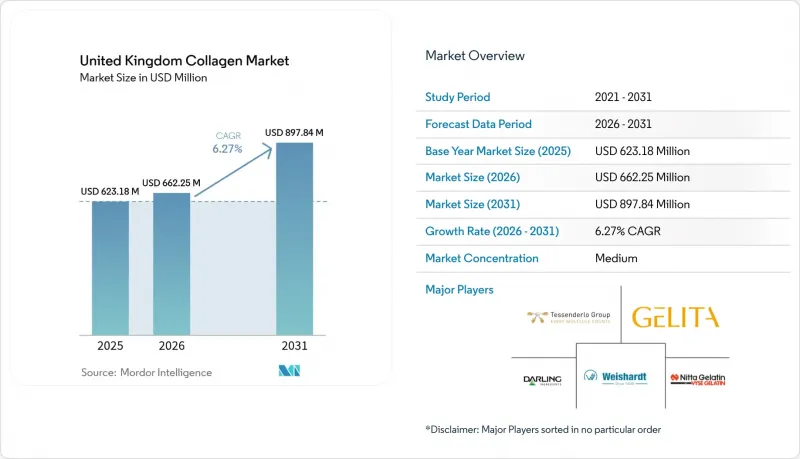
This report is Segmented by Source (Animal-Based, Marine-Based), End User/Application (Food and Beverages, Dietary Supplements, Personal Care and Cosmetics, Pharmaceuticals, Animal Nutrition). The Market Forecasts are Provided in Terms of Value (USD).
United Kingdom Collagen Market Trends and Insights
Ageing population seeking joint and skin health benefits
With the number of citizens aged 65 and older steadily increasing, the market for mobility and skin health solutions is expanding. Seniors participating in randomized-controlled trials showed marked improvements in joint function and retention of lean mass through physiotherapy and daily collagen peptide intake. This demographic's purchasing power allows for premium pricing, as they are often willing to invest in products that enhance their quality of life. Additionally, the trust in supplement efficacy is heightened by the clinical spill-over from NHS wound-care products, which have established a strong reputation for reliability and effectiveness. As the mindset of active aging becomes more prevalent, formulators are combining collagen with vitamin C and hyaluronic acid, creating holistic benefit stacks that address multiple health concerns, such as skin elasticity, hydration, and joint health, appealing to self-managing seniors who prioritize overall well-being.
Growth of sports-nutrition and high-protein lifestyles
Urban consumers, increasingly adopting strength training and recovery routines, are turning to collagen. They value it as a functional protein, noting its unique glycine and proline ratios, which differ from those found in whey and contribute to its distinct benefits for muscle repair, joint health, and skin elasticity. Convenient formats like ready-to-drink beverages and snacks cater to their on-the-go lifestyle, offering ease of consumption without compromising nutritional goals. This is further enhanced by peptide technologies, boasting absorption rates four times faster than native proteins, which makes collagen an efficient option for post-workout recovery and daily wellness. Once the domain of elite athletes, this segment now appeals to a broader lifestyle audience, including fitness enthusiasts, aging populations, and individuals seeking overall wellness. The marketing narrative has evolved too, shifting focus from mere muscle-building to a holistic approach emphasizing body composition, joint support, skin health, and the resilience of connective tissues.
Rising veganism and ethical concerns
With one of Europe's highest rates of vegan adoption, the United Kingdom is significantly impacting the sales of animal-derived collagen. This shift in consumer preferences has prompted brands to innovate by introducing recombinant-fermentation peptides, such as Evonik's Vecollage Fortify L, which replicate Type I and III collagen sequences without relying on animal inputs. These alternatives not only cater to vegan consumers but also align with the growing demand for sustainable and ethical products. Additionally, recombinant-fermentation technology offers scalability and consistency in production, addressing challenges associated with traditional collagen sourcing. To effectively appeal to flexitarian skeptics, brands must prominently emphasize cruelty-free sourcing and reduced carbon footprints on the front label, ensuring transparency and building trust with environmentally conscious consumers.
Other drivers and restraints analyzed in the detailed report include:
- Beauty and nutricosmetics boom in the United Kingdom
- NHS uptake of collagen-based wound-care biomaterials
- Volatile livestock-derived raw-material pricing
For complete list of drivers and restraints, kindly check the Table Of Contents.
Segment Analysis
In 2025, the UK collagen market saw animal-derived peptides firmly at the helm, commanding a robust 67.62% market share. This dominance is largely attributed to established supply chains, competitive pricing, and a consumer base well-acquainted with bovine and porcine sources. Even with rising sustainability concerns, the versatility of animal collagen in nutraceuticals, functional foods, and personal care ensures its continued preference. UK manufacturers enjoy the advantages of a seasoned processing infrastructure and dependable sourcing channels, leading to consistent pricing benefits. Retailers, recognizing the demand, allocate prime shelf space to these traditional formats. Thus, while there's a burgeoning interest in alternative sources, animal peptides steadfastly anchor the UK's collagen market, ensuring both stability and revenue.
On the other hand, marine and biotech collagen formats, though starting from a smaller base, are witnessing rapid growth and attracting significant investments. Marine collagen, boasting a systemic absorption rate four times faster, is particularly sought after in sports nutrition, glycemic-control beverages, and markets catering to active lifestyles. Its appeal is further bolstered by sustainability credentials, with brands emphasizing zero-waste strategies by valorizing fish-processing by-products. This aligns seamlessly with the UK's rising consumer inclination towards circular economy principles. Biotech collagen, while demanding substantial capital, is carving its niche due to its consistent batch quality, a trait highly valued by cosmetic formulators for achieving desired texture and performance. The FSA's clearer Novel Food pathway is streamlining the adoption of fermentation-derived molecules by easing regulatory hurdles. Additionally, regional investments in purification units at Grangemouth and Plymouth are fortifying local supply chains, especially in the evolving post-Brexit trade landscape. Collectively, marine and biotech collagens are not just reshaping the competitive arena but are elevating the category from mere commodities to specialized functional bioactives, emphasizing metabolic health benefits.
Complete Report Scope:
- By Source
- Animal-based
- Marine-based
- By End User/Application
- Food and Beverages
- Dietary Supplements
- Personal Care and Cosmetics
- Pharmaceuticals
- Animal Nutrition
List of Companies Covered in this Report:
- Darling Ingredients (Rousselot)
- GELITA AG
- Nitta Gelatin Inc.
- Tessenderlo Group (PB Gelatins)
- Weishardt Holding SA
- Vital Proteins LLC
- Collagen Solutions plc
- Hunter & Gather Foods Ltd
- Proto-col (On Group Ltd)
- Bare Biology Ltd
- Revive Collagen (Rejuvenated Ltd)
- Planet Paleo Ltd
- Primal Living Ltd
- Your Good Health Co Ltd
- Ewald-Gelatine GmbH
- Italgelatine S.p.A.
- Lapi Gelatine SpA
- SAS Gelatines Weishardt
- Integra LifeSciences Corp.
- Rousselot BV (Peptan)
Additional Benefits:
- The market estimate (ME) sheet in Excel format
- 3 months of analyst support
TABLE OF CONTENTS
1 INTRODUCTION
- 1.1 Study Assumptions and Market Definition
- 1.2 Scope of the Study
2 RESEARCH METHODOLOGY
3 EXECUTIVE SUMMARY
4 MARKET LANDSCAPE
- 4.1 Market Overview
- 4.2 Market Drivers
- 4.2.1 Ageing population seeking joint and skin health benefits
- 4.2.2 Growth of sports-nutrition and high-protein lifestyles
- 4.2.3 Beauty and nutricosmetics boom in the UK
- 4.2.4 NHS uptake of collagen-based wound-care biomaterials
- 4.2.5 Expansion of sustainable UK marine collagen supply chain
- 4.2.6 Subscription-driven D2C e-commerce models
- 4.3 Market Restraints
- 4.3.1 Rising veganism and ethical concerns
- 4.3.2 Volatile livestock-derived raw-material pricing
- 4.3.3 Novel-Food regulatory hurdles for new collagen sources
- 4.3.4 Consumer scepticism over unverified health claims
- 4.4 Supply Chain Analysis
- 4.5 Regulatory Landscape
- 4.6 Technological Outlook
- 4.7 Porter's Five Forces
- 4.7.1 Bargaining Power of Suppliers
- 4.7.2 Bargaining Power of Buyers
- 4.7.3 Threat of New Entrants
- 4.7.4 Threat of Substitutes
- 4.7.5 Competitive Rivalry
5 MARKET SIZE AND GROWTH FORECASTS (VALUE)
- 5.1 By Source
- 5.1.1 Animal-based
- 5.1.2 Marine-based
- 5.2 By End User/Application
- 5.2.1 Food and Beverages
- 5.2.2 Dietary Supplements
- 5.2.3 Personal Care and Cosmetics
- 5.2.4 Pharmaceuticals
- 5.2.5 Animal Nutrition
6 COMPETITIVE LANDSCAPE
- 6.1 Market Concentration
- 6.2 Strategic Moves
- 6.3 Market Ranking Analysis
- 6.4 Company Profiles (includes Global level Overview, Market level overview, Core Segments, Financials as available, Strategic Information, Market Rank/Share for key companies, Products and Services, and Recent Developments)
- 6.4.1 Darling Ingredients (Rousselot)
- 6.4.2 GELITA AG
- 6.4.3 Nitta Gelatin Inc.
- 6.4.4 Tessenderlo Group (PB Gelatins)
- 6.4.5 Weishardt Holding SA
- 6.4.6 Vital Proteins LLC
- 6.4.7 Collagen Solutions plc
- 6.4.8 Hunter & Gather Foods Ltd
- 6.4.9 Proto-col (On Group Ltd)
- 6.4.10 Bare Biology Ltd
- 6.4.11 Revive Collagen (Rejuvenated Ltd)
- 6.4.12 Planet Paleo Ltd
- 6.4.13 Primal Living Ltd
- 6.4.14 Your Good Health Co Ltd
- 6.4.15 Ewald-Gelatine GmbH
- 6.4.16 Italgelatine S.p.A.
- 6.4.17 Lapi Gelatine SpA
- 6.4.18 SAS Gelatines Weishardt
- 6.4.19 Integra LifeSciences Corp.
- 6.4.20 Rousselot BV (Peptan)
7 MARKET OPPORTUNITIES AND FUTURE OUTLOOK

