PUBLISHER: Mordor Intelligence | PRODUCT CODE: 2125469

PUBLISHER: Mordor Intelligence | PRODUCT CODE: 2125469
Plant-Based Food And Beverages - Market Share Analysis, Industry Trends & Statistics, Growth Forecasts (2026 - 2031)
According to Mordor Intelligence, the plant-based food and beverages market size is projected to expand from USD 85.01 billion in 2025 and USD 95.07 billion in 2026 to USD 166.43 billion by 2031, registering a CAGR of 11.85% between 2026 to 2031.
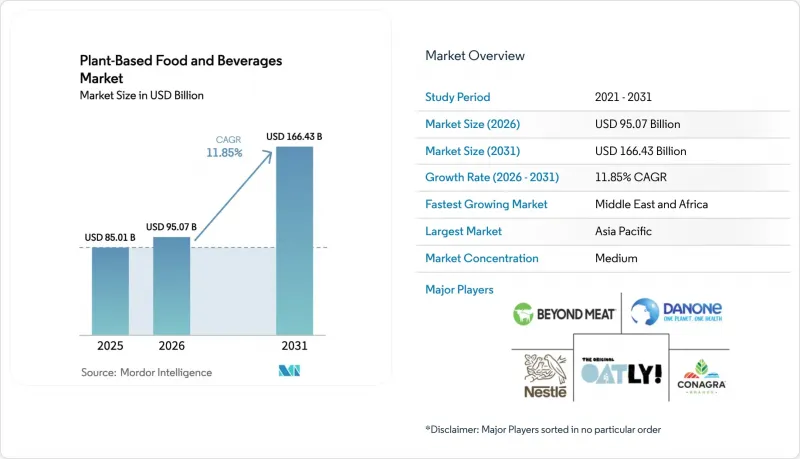
This report is Segmented by Type (Plant-Based Dairy, Meat Substitutes, and More), Ingredient Source (Soy, Almond, Pea, and More), Form (Refrigerated/Chilled, Frozen, and More) Distribution Channel (On-Trade and Off-Trade), and Geography (North America, Europe, Asia-Pacific, South America, and Middle East and Africa). The Market Forecasts are Provided in Terms of Value (USD).
Global Plant-Based Food And Beverages Market Trends and Insights
Expansion of flexitarian and vegetarian lifestyles
The rise in flexitarian and vegetarian lifestyles has become a key driver of the plant-based food and beverage market. More consumers are now choosing to include plant-based options in their daily diets without completely giving up meat. In 2024, ProVeg International reported that approximately 40% of Europe's population identified as flexitarian, highlighting a growing trend of reduced meat consumption. This shift has pushed retailers and foodservice providers to broaden their plant-based product offerings, integrating them into mainstream categories rather than restricting them to niche sections. For example, well-known quick-service restaurant chains and retail brands have begun adding permanent plant-based menu items and expanding their product ranges to meet this changing demand. Increasing consumer awareness about health benefits, environmental sustainability, and the need for dietary variety continues to fuel the growth of plant-based food and beverage consumption worldwide.
Increasing prevalence of lactose intolerance and food allergies
The increasing prevalence of lactose intolerance and food allergies is a major driver of the global plant-based food and beverage market. In 2025, data from the World Population Review showed that some countries, including the Democratic Republic of Congo, Vietnam, South Korea, Yemen, and Mozambique, reported lactose intolerance rates of up to 100%. This highlights a significant demand for dairy-free alternatives. Plant-based beverages like oat milk, almond milk, and soy milk have become popular choices as they provide similar functionality to dairy products without causing digestive issues. To meet this growing demand, manufacturers are developing fortified, allergen-friendly products to cater to consumers with dietary sensitivities. Increasing health awareness and the rising preference for dairy alternatives are further boosting the adoption of plant-based food and beverages worldwide.
Limited consumer awareness and understanding of plant-based nutrition
Low consumer awareness of plant-based nutrition remains a major challenge, especially in emerging markets, where these products are often seen as foreign or Western imports rather than natural extensions of traditional protein sources like lentils, chickpeas, or tofu. Many consumers still hold misconceptions about the protein quality and completeness of plant-based diets, even though the Academy of Nutrition and Dietetics confirmed in 2024 that well-planned plant-based diets can provide all essential nutrients for people at every stage of life. Furthermore, plant-based products are often placed in premium or specialty health sections in stores, which reinforces the idea that they are niche or luxury items rather than everyday food options. This perception limits their appeal to the broader market. Efforts such as placing plant-based products alongside conventional items on shelves and using QR codes to educate consumers about their nutritional benefits are helping to address these issues.
Other drivers and restraints analyzed in the detailed report include:
- Rising ethical concerns related to animal welfare are supporting long-term adoption
- Continuous innovation in plant-based formulations is improving taste, texture, and nutritional profiles
- Rising incidence of soy, nut, and gluten allergies limits consumer adoption
For complete list of drivers and restraints, kindly check the Table Of Contents.
Segment Analysis
In 2025, plant-based dairy products contributed 37.12% of the plant-based food and beverages market revenue, making it the largest segment. The growing demand for alternatives to traditional dairy products is driven by factors such as lactose intolerance, the rise in vegan lifestyles, and increasing environmental awareness. Products such as plant-based milk, yogurt, cheese, and creamers have become popular among consumers, both in retail stores and in foodservice outlets. Companies are focusing on improving the taste and quality of these products while ensuring they are widely available in supermarkets. This segment continues to thrive due to its loyal consumer base and the frequent use of plant-based dairy in daily diets.
The meat substitutes segment is expected to grow at a CAGR of 12.61% from 2026 to 2031, reflecting the increasing shift toward plant-based protein options. Consumers are becoming more aware of health benefits, sustainability issues, and animal welfare, which is driving the demand for plant-based meat products. Manufacturers are using advanced technologies to enhance the texture, flavor, and nutritional content of these products, making them more appealing to a broader audience. Additionally, the availability of plant-based meat in quick-service restaurants and packaged food categories is expanding its reach. As global acceptance grows, this segment is poised to become one of the fastest-growing areas in the plant-based food and beverages market.
Soy is expected to account for 39.55% of the plant-based food and beverages market revenue by ingredient source in 2025, maintaining its dominance as a key raw material. This is largely due to its high protein content, affordability, and versatility, which make it suitable for a range of products such as plant-based milk, meat substitutes, and tofu. The well-established supply chains and large-scale soy cultivation ensure consistent availability and cost efficiency. Its long-standing use in plant-based diets and strong consumer familiarity further contribute to its widespread adoption, solidifying its leading position in the market.
Oat-based ingredients are projected to grow at a CAGR of 13.03% through 2031, driven by increasing consumer demand for allergen-friendly and clean-label options. Oats are naturally free from common allergens like soy and nuts, making them appealing to a wider range of consumers. Their mild flavor and creamy texture make them ideal for dairy alternatives, such as plant-based milk and yogurt. The growing preference for sustainable, minimally processed ingredients has also boosted oats' popularity. Continued product innovation and improved retail availability are expected to support the steady growth of this segment.
Complete Report Scope:
- By Product Type
- Plant-Based Dairy
- Yogurt
- Cheese
- Frozen Desserts and Ice Creams
- Others
- Meat Substitutes
- Tofu
- Tempeh
- Textured Vegetable Protein
- Others
- Plant-Based Nutrition/Snack Bars
- Plant-Based Bakery Products
- Plant-Based Beverages
- Packaged Milk
- Packaged Smoothies
- Coffee
- Tea
- Others
- Other Product Types
- Plant-Based Dairy
- By Ingredient Source
- Soy
- Almond
- Pea
- Oat
- Wheat
- Rice
- Coconut
- Others
- By Form
- Refrigerated/Chilled
- Frozen
- Shelf-Stable/Ambient
- Ready-To-Eat/Ready-To-Cook
- By Distribution Channel
- On-Trade
- Off-Trade
- Supermarkets/Hypermarkets
- Convenience Stores
- Online Stores
- Other Channels
- By Geography
- North America
- United States
- Canada
- Mexico
- Rest of North America
- South America
- Brazil
- Argentina
- Colombia
- Chile
- Peru
- Rest of South America
- Europe
- Germany
- United Kingdom
- Italy
- France
- Spain
- Netherlands
- Poland
- Belgium
- Sweden
- Rest of Europe
- Asia-Pacific
- China
- Japan
- India
- Australia
- Indonesia
- South Korea
- Thailand
- Singapore
- Rest of Asia-Pacific
- Middle East and Africa
- South Africa
- Saudi Arabia
- United Arab Emirates
- Nigeria
- Egypt
- Morocco
- Turkey
- Rest of Middle East and Africa
- North America
Geography Analysis
Asia Pacific accounted for 35.84% of the plant-based food and beverage market revenue in 2025, making it the leading region. This growth is fueled by increasing consumer interest in plant-based diets, driven by health consciousness and the rising popularity of flexitarian lifestyles. Countries like China, Japan, and India are experiencing significant demand driven by large populations and growing urbanization. Local manufacturers are creating products that cater to regional tastes, thereby improving acceptance and accessibility. Investments in production facilities and supply chain networks are further solidifying the region's dominance in the market.
The Middle East and Africa region is expected to grow at a CAGR of 12.05% through 2031, emerging as one of the fastest-growing markets. This growth is supported by increasing awareness of health benefits, a rising need for alternative protein sources, and government initiatives promoting food diversification. Improved retail infrastructure and the availability of plant-based products are making these options more accessible to consumers. Younger generations and urban populations are increasingly interested in plant-based diets, further driving demand. The entry of both global and regional players into the market is expected to accelerate growth in this region.
Europe and North America are mature markets with steady demand, driven by strong consumer awareness of sustainability and established plant-based eating habits. Consumers in these regions are increasingly motivated by environmental concerns, ethical sourcing, and preferences for clean-label products. Retailers are expanding their offerings, including affordable private-label plant-based products, to cater to a wider audience. In Latin America, countries like Brazil and Mexico are experiencing gradual growth due to urbanization and rising consumer awareness of plant-based options. Continued innovation in product development and the expansion of retail distribution channels are expected to support long-term growth in these regions.
- Danone SA
- Nestle SA
- Beyond Meat Inc.
- Oatly Group AB
- Blue Diamond Growers
- Conagra Brands Inc.
- Campbell Soup Company
- Impossible Foods Inc.
- The Hain Celestial Group Inc.
- SunOpta Inc.
- Tofutti Brands Inc.
- Chobani LLC
- Eden Foods Inc.
- Califia Farms LLC
- Kellanova (MorningStar Farms)
- Upfield BV
- Tattooed Chef Inc.
- Valio Ltd.
- Yili Group
- Tyson Foods Inc.
Additional Benefits:
- The market estimate (ME) sheet in Excel format
- 3 months of analyst support
TABLE OF CONTENTS
1 INTRODUCTION
- 1.1 Study Assumptions and Market Definition
- 1.2 Scope of the Study
2 RESEARCH METHODOLOGY
3 EXECUTIVE SUMMARY
4 MARKET LANDSCAPE
- 4.1 Market Overview
- 4.2 Market Drivers
- 4.2.1 Expansion of flexitarian and vegetarian lifestyles
- 4.2.2 Increasing prevalence of lactose intolerance and food allergies
- 4.2.3 Rising ethical concerns related to animal welfare are supporting long-term adoption
- 4.2.4 Continuous innovation in plant-based formulations is improving taste, texture, and nutritional profiles
- 4.2.5 Growing awareness of the environmental impact of animal agriculture
- 4.2.6 Consumer focus on health and wellness is increasing demand for foods perceived as lower in cholesterol, saturated fat, and artificial ingredients
- 4.3 Market Restraints
- 4.3.1 Limited consumer awareness and understanding of plant-based nutrition
- 4.3.2 Rising incidence of soy, nut, and gluten allergies limits consumer adoption
- 4.3.3 Higher prices of plant-based products compared to conventional animal-based alternatives
- 4.3.4 Regulatory ambiguity around labeling terms such as milk, cheese, and meat
- 4.4 Supply Chain Analysis
- 4.5 Consumer Behaviour Analysis
- 4.6 Porter's Five Forces
- 4.6.1 Threat of New Entrants
- 4.6.2 Bargaining Power of Buyers
- 4.6.3 Bargaining Power of Suppliers
- 4.6.4 Threat of Substitute Products
- 4.6.5 Intensity of Competitive Rivalry
5 MARKET SIZE AND GROWTH FORECASTS (VALUE)
- 5.1 By Product Type
- 5.1.1 Plant-Based Dairy
- 5.1.1.1 Yogurt
- 5.1.1.2 Cheese
- 5.1.1.3 Frozen Desserts and Ice Creams
- 5.1.1.4 Others
- 5.1.2 Meat Substitutes
- 5.1.2.1 Tofu
- 5.1.2.2 Tempeh
- 5.1.2.3 Textured Vegetable Protein
- 5.1.2.4 Others
- 5.1.3 Plant-Based Nutrition/Snack Bars
- 5.1.4 Plant-Based Bakery Products
- 5.1.5 Plant-Based Beverages
- 5.1.5.1 Packaged Milk
- 5.1.5.2 Packaged Smoothies
- 5.1.5.3 Coffee
- 5.1.5.4 Tea
- 5.1.5.5 Others
- 5.1.6 Other Product Types
- 5.1.1 Plant-Based Dairy
- 5.2 By Ingredient Source
- 5.2.1 Soy
- 5.2.2 Almond
- 5.2.3 Pea
- 5.2.4 Oat
- 5.2.5 Wheat
- 5.2.6 Rice
- 5.2.7 Coconut
- 5.2.8 Others
- 5.3 By Form
- 5.3.1 Refrigerated/Chilled
- 5.3.2 Frozen
- 5.3.3 Shelf-Stable/Ambient
- 5.3.4 Ready-To-Eat/Ready-To-Cook
- 5.4 By Distribution Channel
- 5.4.1 On-Trade
- 5.4.2 Off-Trade
- 5.4.2.1 Supermarkets/Hypermarkets
- 5.4.2.2 Convenience Stores
- 5.4.2.3 Online Stores
- 5.4.2.4 Other Channels
- 5.5 By Geography
- 5.5.1 North America
- 5.5.1.1 United States
- 5.5.1.2 Canada
- 5.5.1.3 Mexico
- 5.5.1.4 Rest of North America
- 5.5.2 South America
- 5.5.2.1 Brazil
- 5.5.2.2 Argentina
- 5.5.2.3 Colombia
- 5.5.2.4 Chile
- 5.5.2.5 Peru
- 5.5.2.6 Rest of South America
- 5.5.3 Europe
- 5.5.3.1 Germany
- 5.5.3.2 United Kingdom
- 5.5.3.3 Italy
- 5.5.3.4 France
- 5.5.3.5 Spain
- 5.5.3.6 Netherlands
- 5.5.3.7 Poland
- 5.5.3.8 Belgium
- 5.5.3.9 Sweden
- 5.5.3.10 Rest of Europe
- 5.5.4 Asia-Pacific
- 5.5.4.1 China
- 5.5.4.2 Japan
- 5.5.4.3 India
- 5.5.4.4 Australia
- 5.5.4.5 Indonesia
- 5.5.4.6 South Korea
- 5.5.4.7 Thailand
- 5.5.4.8 Singapore
- 5.5.4.9 Rest of Asia-Pacific
- 5.5.5 Middle East and Africa
- 5.5.5.1 South Africa
- 5.5.5.2 Saudi Arabia
- 5.5.5.3 United Arab Emirates
- 5.5.5.4 Nigeria
- 5.5.5.5 Egypt
- 5.5.5.6 Morocco
- 5.5.5.7 Turkey
- 5.5.5.8 Rest of Middle East and Africa
- 5.5.1 North America
6 COMPETITIVE LANDSCAPE
- 6.1 Market Concentration
- 6.2 Strategic Moves
- 6.3 Market Share Analysis
- 6.4 Company Profiles (includes Global-level Overview, Market-level Overview, Core Segments, Financials (if available), Strategic Information, Market Rank/Share, Products and Services, Recent Developments)
- 6.4.1 Danone SA
- 6.4.2 Nestle SA
- 6.4.3 Beyond Meat Inc.
- 6.4.4 Oatly Group AB
- 6.4.5 Blue Diamond Growers
- 6.4.6 Conagra Brands Inc.
- 6.4.7 Campbell Soup Company
- 6.4.8 Impossible Foods Inc.
- 6.4.9 The Hain Celestial Group Inc.
- 6.4.10 SunOpta Inc.
- 6.4.11 Tofutti Brands Inc.
- 6.4.12 Chobani LLC
- 6.4.13 Eden Foods Inc.
- 6.4.14 Califia Farms LLC
- 6.4.15 Kellanova (MorningStar Farms)
- 6.4.16 Upfield BV
- 6.4.17 Tattooed Chef Inc.
- 6.4.18 Valio Ltd.
- 6.4.19 Yili Group
- 6.4.20 Tyson Foods Inc.
7 MARKET OPPORTUNITIES AND FUTURE OUTLOOK

