PUBLISHER: Mordor Intelligence | PRODUCT CODE: 2099096

PUBLISHER: Mordor Intelligence | PRODUCT CODE: 2099096
Thailand Pet Veterinary Diets - Market Share Analysis, Industry Trends & Statistics, Growth Forecasts (2026 - 2031)
According to Mordor Intelligence, the Thailand pet veterinary diets market was valued at USD 207.27 million in 2025 and is projected to grow from USD 232.13 million in 2026 to USD 411.72 million by 2031, registering a CAGR of 12.30% during the forecast period (2026-2031).
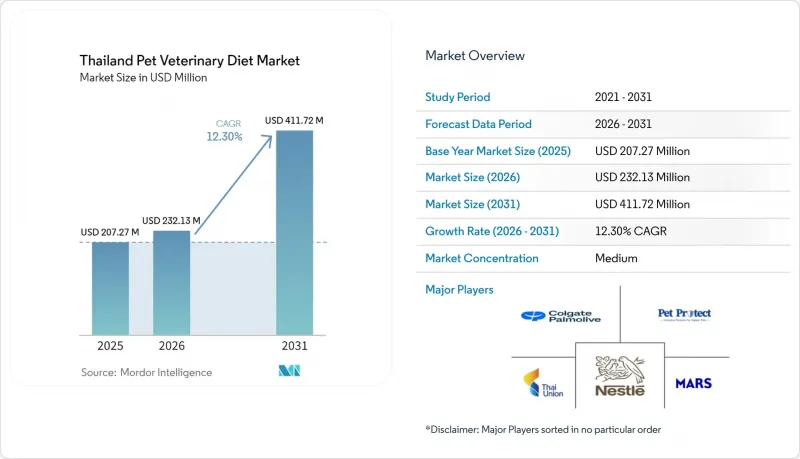
This report is Segmented by Sub-Product (Urinary Tract Disease, Diabetes, Probiotics, Renal, Digestive Sensitivity, Oral Care Diets, and More), by Pets (Cats, Dogs, and Other Pets), and by Distribution Channel (Convenience Stores, Online Channel, Specialty Stores, Supermarkets and Hypermarkets, and More). The Market Forecasts are Provided in Terms of Value (USD) and Volume (Metric Tons).
Thailand Pet Veterinary Diets Market Trends and Insights
Pet Humanization and Willingness to Pay for Preventive Care
Pet humanization is increasingly shaping healthcare spending decisions among Thai pet owners, driving higher demand for preventive veterinary services and therapeutic nutrition. According to data from The Nation in 2024, Thai households spent an average of THB 41,100 (USD 1,175) per pet annually, including supplements, vaccinations, and medical treatments. This growing focus on pet health supports the Thailand pet veterinary diets market, as owners investing in preventive care are more inclined to adopt veterinarian-recommended therapeutic diets for long-term health management. As a result, veterinary diets benefit from improved treatment adherence, recurring purchases, and consistent demand in chronic care categories.
Rising Routine Vet Visit Frequency Among Urban Pet Parents
Routine veterinary consultations are increasingly common among urban pet owners in Thailand, providing veterinarians with opportunities to recommend therapeutic nutrition as part of preventive healthcare programs. This trend is driving growth in the Thailand pet veterinary diets market, as prescription diets are often introduced during wellness examinations, chronic disease monitoring, and follow-up consultations. In 2024, Arak Animal Healthcare opened its new Thong Lor referral center in Bangkok, Thailand, serving over 6,000 families in its first year of operation, underscoring the growing number of pet-owning households seeking professional veterinary care. As routine health checks become more prevalent, earlier disease detection is boosting demand for long-term veterinary dietary management and specialized nutrition products.
Shortage of Veterinarians and Specialist Staff
The shortage of veterinarians and specialist staff continues to be a significant challenge for the Thailand pet veterinary diets market. Therapeutic diets rely on professional diagnosis, prescription, and ongoing monitoring, all of which are impacted by workforce limitations. The demand for companion animal healthcare is increasing, further intensifying these pressures. According to a veterinary workforce whitepaper from 2025, 58% of Thai veterinarians reported working 50 or more hours per week, underscoring heavy workloads and the risk of burnout within the profession. Limited availability of specialists can reduce consultation capacity, delay disease diagnosis, and hinder the management of chronic conditions that require nutritional interventions. These staffing challenges may slow the growth of clinical services and the adoption of long-term therapeutic diets in the market.
Other drivers and restraints analyzed in the detailed report include:
- Expansion of 24-Hour and Referral-Based Specialty Clinics
- Uptake of Pet Insurance and Wellness Plans
- Uneven Rural Access to Quality Pet Veterinary Services
For complete list of drivers and restraints, kindly check the Table Of Contents.
Segment Analysis
The Thailand pet veterinary diets market share for the digestive sensitivity segment held the largest 20.1% in 2025. This segment maintains its leading position due to the prevalence of gastrointestinal disorders, which are among the most commonly treated conditions in companion animal practice. The widespread adoption of digestive sensitivity diets is driven by their applicability across various age groups and breeds, making them a frequent nutritional recommendation by veterinarians. Additionally, high owner awareness supports this segment, as digestive symptoms are often visible and easier to identify compared to other internal health issues. The growing focus on preventive care and nutritional management further bolsters the demand for digestive sensitivity formulations.
Oral care diets are projected to grow at the fastest CAGR of 13.7% from 2026 to 2031, driven by the rising prevalence of dental disease in companion animal care across Thailand. Periodontal disease affects most dogs older than three years, but diagnosis has historically been limited in settings where dental checks are not part of routine care. As specialist veterinary chains in Bangkok make dental scoring a standard part of wellness visits, more pets are being identified for oral care support at the consultation stage. This creates a steadier prescription flow for oral care diets and reduces dependence on one-time treatment episodes.
Complete Report Scope:
- By Sub Product
- Urinary tract disease
- Diabetes
- Renal
- Digestive Sensitivity
- Oral Care Diets
- Other Veterinary Diets
- Derma Diets
- Obesity Diets
- By Pets
- Cats
- Dogs
- Other Pets
- By Distribution Channel
- Convenience Stores
- Online Channel
- Specialty Stores
- Supermarkets/Hypermarkets
- Other Channels
List of Companies Covered in this Report:
- Pet Protect Food Co., Ltd.
- Betagro Public Company Limited
- Thai Union Group Public Company Limited
- Perfect Companion Group Co., Ltd. (CP Group)
- Mars, Incorporated
- Hill's Pet Nutrition Inc. (Colgate-Palmolive Company)
- Nestle Purnia Petcare Company (Nestle S.A.)
- Virbac S.A.
- Pawdy Innovation Co., Ltd.
- Smart Vet Co., Ltd.
- Sun Operation Co.,Ltd.
Additional Benefits:
- The market estimate (ME) sheet in Excel format
- 3 months of analyst support
TABLE OF CONTENTS
1 INTRODUCTION
- 1.1 Study Assumptions and Market Definition
- 1.2 Scope of the Study
- 1.3 Research Methodology
2 REPORT OFFERS
3 EXECUTIVE SUMMARY AND KEY FINDINGS
4 KEY INDUSTRY TRENDS
- 4.1 Pet Population
- 4.1.1 Cats
- 4.1.2 Dogs
- 4.1.3 Other Pets
- 4.2 Pet Expenditure
- 4.3 Consumer Trends
5 SUPPLY AND PRODUCTION DYNAMICS
- 5.1 Trade Analysis
- 5.2 Ingredient Trends
- 5.3 Value Chain and Distribution Channel Analysis
- 5.4 Regulatory Framework
- 5.5 Market Drivers
- 5.5.1 Pet humanization and willingness to pay for preventive care
- 5.5.2 Rising routine vet visit frequency among urban pet parents
- 5.5.3 Expansion of 24-hour and referral-based specialty clinics
- 5.5.4 Uptake of pet insurance and wellness plans
- 5.5.5 Growth of at-home testing, supplements, and tele-triage
- 5.5.6 Multi-branch chain expansion into secondary Thai cities
- 5.6 Market Restraints
- 5.6.1 High out-of-pocket cost for advanced diagnostics and surgery
- 5.6.2 Shortage of veterinarians and specialist staff
- 5.6.3 Uneven rural access to quality pet veterinary services
- 5.6.4 Low awareness of preventive care outside major cities
6 MARKET SIZE AND GROWTH FORECASTS (VALUE AND VOLUME)
- 6.1 By Sub Product
- 6.1.1 Urinary tract disease
- 6.1.2 Diabetes
- 6.1.3 Renal
- 6.1.4 Digestive Sensitivity
- 6.1.5 Oral Care Diets
- 6.1.6 Other Veterinary Diets
- 6.1.7 Derma Diets
- 6.1.8 Obesity Diets
- 6.2 By Pets
- 6.2.1 Cats
- 6.2.2 Dogs
- 6.2.3 Other Pets
- 6.3 By Distribution Channel
- 6.3.1 Convenience Stores
- 6.3.2 Online Channel
- 6.3.3 Specialty Stores
- 6.3.4 Supermarkets/Hypermarkets
- 6.3.5 Other Channels
7 COMPETITIVE LANDSCAPE
- 7.1 Key Strategic Moves
- 7.2 Market Share Analysis
- 7.3 Brand Positioning Matrix
- 7.4 Market Claim Analysis
- 7.5 Company Landscape
- 7.6 Company Profiles (Includes Global Level Overview, Market Level Overview, Core Business Segments, Financials, Headcount, Key Information, Market Rank, Market Share, Products and Services, and Analysis of Recent Developments)
- 7.6.1 Pet Protect Food Co., Ltd.
- 7.6.2 Betagro Public Company Limited
- 7.6.3 Thai Union Group Public Company Limited
- 7.6.4 Perfect Companion Group Co., Ltd. (CP Group)
- 7.6.5 Mars, Incorporated
- 7.6.6 Hill's Pet Nutrition Inc. (Colgate-Palmolive Company)
- 7.6.7 Nestle Purnia Petcare Company (Nestle S.A.)
- 7.6.8 Virbac S.A.
- 7.6.9 Pawdy Innovation Co., Ltd.
- 7.6.10 Smart Vet Co., Ltd.
- 7.6.11 Sun Operation Co.,Ltd.
8 KEY STRATEGIC QUESTIONS FOR STAKEHOLDERS

