PUBLISHER: Mordor Intelligence | PRODUCT CODE: 2099232

PUBLISHER: Mordor Intelligence | PRODUCT CODE: 2099232
United States Pet Veterinary Diets - Market Share Analysis, Industry Trends & Statistics, Growth Forecasts (2026 - 2031)
According to Mordor Intelligence, the United States pet veterinary diets market size is projected to grow from USD 11.71 billion in 2025 to USD 12.60 billion in 2026 and is forecast to reach USD 19.29 billion by 2031 at 9.20% CAGR over 2026-2031.
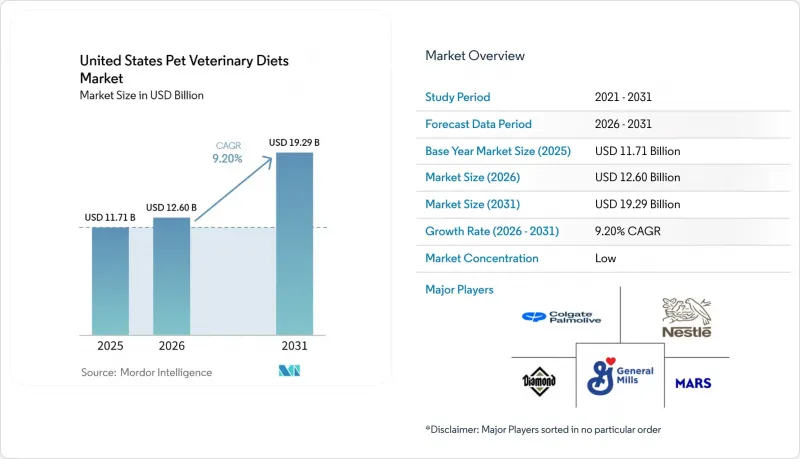
This report is Segmented by Sub Product (Diabetes, Digestive Sensitivity, Oral Care Diets, Renal, Urinary Tract Disease, and More), by Pets (Cats, Dogs, and More), and by Distribution Channel (Convenience Stores, Online Channel, Specialty Stores, Supermarkets/Hypermarkets, and More). The Market Forecasts are Provided in Terms of Value (USD) and Volume (Metric Tons).
United States Pet Veterinary Diets Market Trends and Insights
Gastrointestinal Disorders Lead Veterinary Diagnoses
According to the American Animal Hospital Association (AAHA), gastrointestinal disorders emerged as a key growth driver in 2024, accounting for 23% of all veterinary diagnoses and surpassing skin and ear infections as the leading condition prompting therapeutic nutrition prescriptions. According to 2024 veterinary clinical findings, hydrolyzed-protein prescription diets achieved symptom resolution rates of nearly 67% compared with conventional drug-only treatment approaches, accelerating the shift toward diet-first disease management. Furthermore, the Center for Veterinary Medicine expanded therapeutic claim approvals in 2024 for hydrolyzed-protein and novel-carbohydrate formulations, enabling more precise nutritional interventions for pets with complex gastrointestinal disorders. The growing prevalence of digestive health conditions and the strong clinical performance of specialized veterinary diets continue to drive adoption across the United States pet veterinary diets market.
Rapid Premiumization in Pet Specialty Retail
In the United States pet veterinary diets market, premiumization accelerated across specialty retail channels as average selling prices for therapeutic diets increased alongside demand for personalized nutritional support. Independent pet specialty retailers strengthened profitability through exclusive distribution partnerships with therapeutic diet manufacturers, while mass-market retailers faced challenges competing on veterinary nutrition expertise and customized care services. The market's premium evolution now extends beyond high-quality ingredients to include individualized nutrition counseling, subscription-based delivery programs, and integration with veterinary practice management platforms that streamline prescription fulfillment and improve long-term treatment compliance. Growing consumer willingness to pay for clinically guided nutrition solutions continues to support the expansion of premium therapeutic diet offerings across the United States market.
High Product Price Elasticity in Inflationary Cycles
Rising inflation and higher pet care costs have increased consumer price sensitivity toward therapeutic nutrition products. Veterinary industry assessments indicate that purchases of therapeutic pet diets show measurable price elasticity, with many pet owners shifting toward lower-cost alternatives, reducing purchase frequency, or extending feeding durations to manage household budgets. Price sensitivity is particularly pronounced in rural regions of the United States, where demand for prescription veterinary diets weakened more rapidly following retail price increases compared with metropolitan markets. Economic pressures have also prompted some veterinarians and pet owners to adopt mixed-feeding approaches that combine prescription diets with conventional pet food to reduce monthly expenses, though this may limit the clinical effectiveness of nutritional management programs for chronic gastrointestinal, renal, urinary, and diabetic conditions. According to the American Pet Products Association's analysis of 2024 US pet care expenditure and inflation trends, affordability concerns continue to influence purchasing behavior across the therapeutic pet nutrition segment.
Other drivers and restraints analyzed in the detailed report include:
- Veterinarian-Driven Subscription E-commerce Programs
- Algorithmic Diet-Matching Tools Inside Practice Software
- Low Owner Compliance with Long-Term Diet Plans
For complete list of drivers and restraints, kindly check the Table Of Contents.
Segment Analysis
Digestive sensitivity diets accounted for 16.6% of the United States pet veterinary diet market share in 2025, the largest share among therapeutic categories. This position is driven by rising diagnoses of inflammatory bowel disease, food allergies, and microbiome imbalance, which have prompted veterinarians to prescribe hydrolyzed-protein and novel-carbohydrate formulas as first-line interventions. Oral care diets are the fastest growing segment at a 9.8% CAGR from 2026 to 2031, supported by preventive dentistry programs that combine mechanical-abrasion kibble design with Food and Drug Administration (FDA)-approved enzymatic plaque reducers. New product launches are further supporting this segment. For instance, in March 2026, Petcurean launched Go! Solutions Dental + Immune Health Chicken + Salmon Recipes with Grains at Global Pet Expo 2026 in the United States, targeting dental and immune health support for pets. The formulation demonstrated up to a 58% reduction in gingivitis in cats during company trials, reflecting the rising demand for functional therapeutic nutrition in the United States pet veterinary diets market.
Renal lines maintain steady demand as aging pets with chronic kidney disease require phosphorus-restricted blends, while diabetes diets use controlled-release carbohydrates and soluble fiber to support insulin therapy. Dermatology products focus on eliminating allergenic proteins and incorporate omega fatty acids to support skin barrier repair. Obesity formulas provide calorie-restricted yet nutrient-complete meals for sustainable weight control. Urinary tract blends regulate pH and mineral levels to reduce stone formation. Cardiac, hepatic, and recovery formulas remain smaller but essential categories, providing taurine, modified proteins, and higher caloric density for complex medical cases. Ongoing clinical trials and FDA claim expansions maintain high scientific standards, supporting continued category innovation and reinforcing premium price positions within the United States pet veterinary diet market.
Complete Report Scope:
- Sub Product
- Diabetes
- Renal
- Urinary Tract Disease
- Digestive Sensitivity
- Oral Care Diets
- Derma Diets
- Obesity Diets
- Other Veterinary Diets
- Pets
- Cats
- Dogs
- Other Pets
- Distribution Channel
- Convenience Stores
- Online Channel
- Specialty Stores
- Supermarkets/Hypermarkets
- Other Channels
List of Companies Covered in this Report:
- Mars, Incorporated
- Nestle Purina Pet Care Company (Nestle S.A.)
- Farmina Pet Foods
- Colgate-Palmolive Company (Hill's Pet Nutrition Inc.)
- Schell & Kampeter (Diamond Pet)
- General Mills, Inc.
- Rayne Clinical Nutrition LLC
- Virbac S.A.
- JustFoodForDogs LLC
- Freshpet, Inc
- The Farmer's Dog, Inc.
- Petcurean Pet Nutrition
- Wynwood Dog Food Co.
- Affinity Petcare S.A. (Agrolimen)
- Dechra Pharmaceuticals PLC
Additional Benefits:
- The market estimate (ME) sheet in Excel format
- 3 months of analyst support
TABLE OF CONTENTS
1 INTRODUCTION
- 1.1 Study Assumptions And Market Definition
- 1.2 Scope of the Study
- 1.3 Research Methodology
2 REPORT OFFERS
3 EXECUTIVE SUMMARY AND KEY FINDINGS
4 KEY INDUSTRY TRENDS
- 4.1 Pet Population
- 4.1.1 Cats
- 4.1.2 Dogs
- 4.1.3 Other Pets
- 4.2 Pet Expenditure
- 4.3 Consumer Trends
5 SUPPLY AND PRODUCTION DYNAMICS
- 5.1 Trade Analysis
- 5.2 Ingredient Trends
- 5.3 Value Chain And Distribution Channel Analysis
- 5.4 Regulatory Framework
- 5.5 Market Drivers
- 5.5.1 Gastrointestinal Disorders Lead Veterinary Diagnoses
- 5.5.2 Rapid Premiumization in Pet Specialty Retail
- 5.5.3 Veterinarian-Driven Subscription E-commerce Programs
- 5.5.4 Algorithmic Diet-Matching Tools Inside Practice Software
- 5.5.5 Probiotic Postbiotics Enabling Lower-Dose Drug Regimens
- 5.5.6 Pet Insurance Chronic-Care Coverage Expansion
- 5.6 Market Restraints
- 5.6.1 High Product Price Elasticity in Inflationary Cycles
- 5.6.2 Low Owner Compliance With Long-Term Diet Plans
- 5.6.3 Growth of Compounded "Home-Cook Kits" in Tele-Vet Forums
- 5.6.4 Phosphorus Sourcing Risk Due to European Union Fertilizer Directives
6 MARKET SIZE AND GROWTH FORECASTS (VALUE AND VOLUME)
- 6.1 Sub Product
- 6.1.1 Diabetes
- 6.1.2 Renal
- 6.1.3 Urinary Tract Disease
- 6.1.4 Digestive Sensitivity
- 6.1.5 Oral Care Diets
- 6.1.6 Derma Diets
- 6.1.7 Obesity Diets
- 6.1.8 Other Veterinary Diets
- 6.2 Pets
- 6.2.1 Cats
- 6.2.2 Dogs
- 6.2.3 Other Pets
- 6.3 Distribution Channel
- 6.3.1 Convenience Stores
- 6.3.2 Online Channel
- 6.3.3 Specialty Stores
- 6.3.4 Supermarkets/Hypermarkets
- 6.3.5 Other Channels
7 COMPETITIVE LANDSCAPE
- 7.1 Key Strategic Moves
- 7.2 Market Share Analysis
- 7.3 Brand Positioning Matrix
- 7.4 Market Claim Analysis
- 7.5 Company Landscape
- 7.6 Company Profiles (Includes Global Level Overview, Market Level Overview, Core Business Segments, Financials as Available, Key Information, Market Rank, Market Share, Products and Services, and Analysis of Recent Developments).
- 7.6.1 Mars, Incorporated
- 7.6.2 Nestle Purina Pet Care Company (Nestle S.A.)
- 7.6.3 Farmina Pet Foods
- 7.6.4 Colgate-Palmolive Company (Hill's Pet Nutrition Inc.)
- 7.6.5 Schell & Kampeter (Diamond Pet)
- 7.6.6 General Mills, Inc.
- 7.6.7 Rayne Clinical Nutrition LLC
- 7.6.8 Virbac S.A.
- 7.6.9 JustFoodForDogs LLC
- 7.6.10 Freshpet, Inc
- 7.6.11 The Farmer's Dog, Inc.
- 7.6.12 Petcurean Pet Nutrition
- 7.6.13 Wynwood Dog Food Co.
- 7.6.14 Affinity Petcare S.A. (Agrolimen)
- 7.6.15 Dechra Pharmaceuticals PLC
8 KEY STRATEGIC QUESTIONS FOR STAKEHOLDERS

