PUBLISHER: Mordor Intelligence | PRODUCT CODE: 2113249

PUBLISHER: Mordor Intelligence | PRODUCT CODE: 2113249
Africa Food Flavor - Market Share Analysis, Industry Trends & Statistics, Growth Forecasts (2026 - 2031)
According to Mordor Intelligence, the Africa food flavor market size was valued at USD 1.13 billion in 2025 and estimated to grow from USD 1.18 billion in 2026 to reach USD 1.47 billion by 2031, at a CAGR of 4.50% during the forecast period (2026-2031).
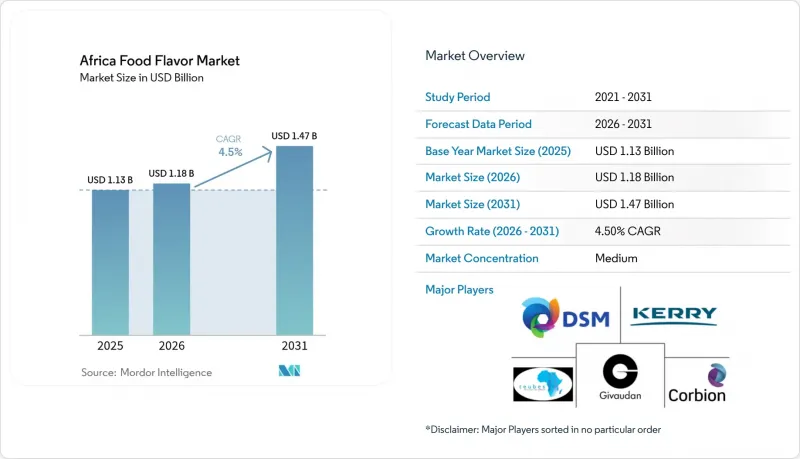
This report is Segmented by Type (Natural Flavor, Synthetic Flavor, Nature Identical Flavoring), Application (Dairy, Bakery, Confectionery, Savory Snack, Meat, Beverages, Others), Form (Powder, Liquid, Others), and Geography (South Africa, Nigeria, Kenya, Egypt, Rest of Africa). The Market Forecasts are Provided in Terms of Value (USD).
Africa Food Flavor Market Trends and Insights
Rising Demand for Natural Clean-Label Flavors
Across Africa's urban markets, consumers are increasingly demanding natural flavor solutions, driven by a heightened awareness of ingredient transparency. This shift mirrors a broader trend towards health consciousness, prompting manufacturers to reformulate products in line with clean-label expectations. Symrise, underscoring the industry's commitment, highlights its strategic investment in sourcing natural raw materials, boasting a 95% sustainability rate for its strategic biological materials. This trend is especially pronounced in South Africa's established retail landscape, where consumers are not only scrutinizing ingredient lists but also gravitating towards products that resonate with wellness ideals.
Consumer Preference for International and Ethnic Cuisines
Food-service outlets in Johannesburg and Lagos now serve up Korean barbecue, Mexican tacos, and Thai curries, introducing diners to flavors like chili, lemongrass, and chipotle. In response, packaged-food brands are rolling out fusion crisps, spicy mayonnaise, and ramen seasonings, all tailored to local taste preferences. This trend is bolstering the African food flavor market, as each new fusion SKU demands custom formulation and sensory testing. Givaudan reports that its culinary centers in South Africa are conducting co-creation workshops, where chefs and technologists fine-tune spice intensity to suit West African tastes. This collaboration results in an expanded SKU count, boosting volumes for both natural and synthetic flavor bases.
Fragmented Cold-Chain and Logistics Infrastructure
Infrastructure limitations hinder market growth in Nigeria, where inadequate cold storage and transportation networks lead to increased spoilage rates and restrict product distribution. The ColdHubs initiative in Nigeria, with its 58 cold rooms preventing the loss of 13,800 kg of food, showcases innovative solutions but underscores the significant infrastructure gaps. This fragmentation is especially detrimental to natural flavor ingredients, which need temperature-controlled storage and transport. As a result, manufacturers are often compelled to turn to synthetic alternatives or bear the brunt of elevated costs for specialized logistics.
Other drivers and restraints analyzed in the detailed report include:
- Sustainability and Upcycled Ingredients in Flavor Manufacturing
- Flavor Innovation in Alcoholic Beverages and RTD Cocktails
- Volatile Currency and Import-Dependence for Key Inputs
For complete list of drivers and restraints, kindly check the Table Of Contents.
Segment Analysis
In 2025, synthetic flavors command a dominant 70.88% market share, thanks to their cost advantages and reliable supply chains, even in unpredictable economic climates. While natural flavors hold a smaller slice of the market, they are the fastest-growing segment, expanding at a 6.48% CAGR through 2031, driven by a surge in consumer health awareness and a preference for clean labels. Nature-identical flavoring finds a niche, balancing cost-effectiveness with a nod to consumers' desire for natural-sounding ingredients.
The synthetic segment's stronghold is anchored in price stability and reliable availability. These factors are paramount for manufacturers, especially in currency-volatile regions where import costs can swing widely. While natural flavors grapple with supply chain hurdles, they are reaping rewards from premiumization trends. This is especially evident in South Africa's established market, where consumers are willing to pay a premium for perceived health advantages. Moreover, as regulatory bodies like NAFDAC in Nigeria and SAHPRA in South Africa tighten their scrutiny on flavor additives, it could hasten the industry's pivot towards natural alternatives, especially as compliance standards evolve
Complete Report Scope:
- By Type
- Natural Flavor
- Synthetic Flavor
- Nature Identical Flavoring
- By Application
- Dairy
- Bakery
- Confectionery
- Savory Snack
- Meat
- Beverages
- Others
- By Form
- Powder
- Liquid
- Others
- By Geography
- South Africa
- Nigeria
- Kenya
- Egypt
- Rest of Africa
List of Companies Covered in this Report:
- Givaudan
- DSM-Firmenich
- Kerry Group
- Symrise
- IFF
- Sensient Technologies
- Archer Daniels Midland
- BASF
- Corbion
- Takasago
- Teubes (South Africa)
- FlavourCraft (Kenya)
- Treatt
- Olam Food Ingredients
- AfroFlavor Labs (Nigeria)
- Mane SA
- Robertet
- Manifatture Arditi
- Sensient South Africa
- Flavorchem (Africa)
Additional Benefits:
- The market estimate (ME) sheet in Excel format
- 3 months of analyst support
TABLE OF CONTENTS
1 INTRODUCTION
- 1.1 Study Assumptions and Market Definition
- 1.2 Scope of the Study
2 RESEARCH METHODOLOGY
3 EXECUTIVE SUMMARY
4 MARKET DYNAMICS
- 4.1 Market Overview
- 4.2 Market Drivers
- 4.2.1 Rising demand for natural clean-label flavors
- 4.2.2 Growth of packaged and convenience-food sector
- 4.2.3 Expansion of flavored RTD beverages and energy drinks
- 4.2.4 Consumer preference for international and ethnic cuisines
- 4.2.5 Sustainability and upcycled ingredients in flavor manufacturing
- 4.2.6 Flavor innovation in alcoholic beverages and RTD cocktails
- 4.3 Market Restraints
- 4.3.1 Fragmented cold-chain and logistics infrastructure
- 4.3.2 Volatile currency and import-dependence for key inputs
- 4.3.3 Changing regulatory landscape
- 4.3.4 Counterfeit and low-quality flavor products
- 4.4 Supply Chain Analysis
- 4.5 Regulatory Landscape
- 4.6 Technological Outlook
- 4.7 Porter's Five Forces
- 4.7.1 Threat of New Entrants
- 4.7.2 Bargaining Power of Buyers
- 4.7.3 Bargaining Power of Suppliers
- 4.7.4 Threat of Substitute Products
- 4.7.5 Intensity of Competitive Rivalry
5 MARKET SIZE AND GROWTH FORECASTS (VALUE)
- 5.1 By Type
- 5.1.1 Natural Flavor
- 5.1.2 Synthetic Flavor
- 5.1.3 Nature Identical Flavoring
- 5.2 By Application
- 5.2.1 Dairy
- 5.2.2 Bakery
- 5.2.3 Confectionery
- 5.2.4 Savory Snack
- 5.2.5 Meat
- 5.2.6 Beverages
- 5.2.7 Others
- 5.3 By Form
- 5.3.1 Powder
- 5.3.2 Liquid
- 5.3.3 Others
- 5.4 By Geography
- 5.4.1 South Africa
- 5.4.2 Nigeria
- 5.4.3 Kenya
- 5.4.4 Egypt
- 5.4.5 Rest of Africa
6 COMPETITIVE LANDSCAPE
- 6.1 Market Concentration
- 6.2 Strategic Moves
- 6.3 Market Share Analysis
- 6.4 Company Profiles (includes Global level Overview, Market level overview, Core Segments, Financials, Strategic Information, Market Rank/Share, Products and Services, Recent Developments)
- 6.4.1 Givaudan
- 6.4.2 DSM-Firmenich
- 6.4.3 Kerry Group
- 6.4.4 Symrise
- 6.4.5 IFF
- 6.4.6 Sensient Technologies
- 6.4.7 Archer Daniels Midland
- 6.4.8 BASF
- 6.4.9 Corbion
- 6.4.10 Takasago
- 6.4.11 Teubes (South Africa)
- 6.4.12 FlavourCraft (Kenya)
- 6.4.13 Treatt
- 6.4.14 Olam Food Ingredients
- 6.4.15 AfroFlavor Labs (Nigeria)
- 6.4.16 Mane SA
- 6.4.17 Robertet
- 6.4.18 Manifatture Arditi
- 6.4.19 Sensient South Africa
- 6.4.20 Flavorchem (Africa)
7 MARKET OPPORTUNITIES AND FUTURE TRENDS

