PUBLISHER: Mordor Intelligence | PRODUCT CODE: 2116715

PUBLISHER: Mordor Intelligence | PRODUCT CODE: 2116715
Spain Luxury Goods - Market Share Analysis, Industry Trends & Statistics, Growth Forecasts (2026 - 2031)
According to Mordor Intelligence, Spain luxury goods market size in 2026 is estimated at USD 7.4 billion, growing from 2025 value of USD 7.07 billion with 2031 projections showing USD 9.32 billion, growing at 4.72% CAGR over 2026-2031.
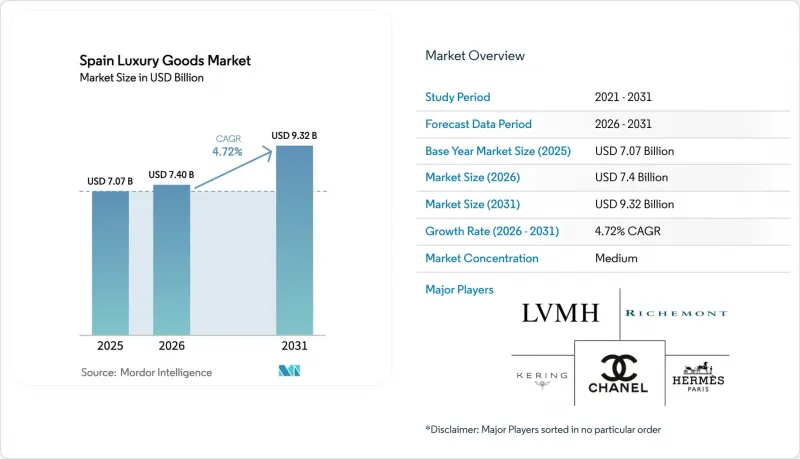
This report is Segmented by Product Type (Clothing and Apparel, Footwear, Eyewear, Jewelry, Leather Goods, Watches, Other Types), End User (Men, Women, Unisex), Distribution Channel (Single Brand Stores, Multi Brand Stores, Online Stores, Other Distribution Channels), and Geography. The Market Forecasts are Provided in Terms of Value (USD).
Spain Luxury Goods Market Trends and Insights
Growing affluent and high-net-worth individual base
Growing numbers of affluent and high-net-worth individuals in Spain are a fundamental demand driver for the country's luxury goods market. As private wealth rises, this segment allocates a larger share of spending to discretionary categories such as designer fashion, leather goods, fine jewelry, and premium watches. Wealth concentration in Spain's top 1% increased from 22.1% of total household net worth in 2020 to 24.3% in 2024, expanding the addressable base for ultra-premium niches like haute joaillerie, bespoke tailoring, and made-to-measure accessories . This concentrated purchasing power is especially visible in hubs such as Madrid and Barcelona, where it supports a dense network of flagships and high-service boutiques. High-net-worth clientele are relatively insulated from short-term macroeconomic volatility, providing a resilient revenue stream when mass-market demand softens. They also seek exclusivity, limited editions, and personalized experiences, encouraging brands to invest in VIP lounges, private events, and concierge-style services.
Increasing brand consciousness and prestige demand
Increasing brand consciousness and prestige demand are key forces propelling Spain's luxury goods market, as consumers place greater value on labels that signal status, taste, and social distinction. Exposure to global fashion trends through social media, influencers, and international travel has heightened awareness of leading maisons and sharpened preferences for recognizable logos and signature designs. Younger affluent shoppers, in particular, view luxury purchases as expressions of identity and lifestyle, driving interest in statement handbags, sneakers, and accessories. At the same time, more mature clients continue to prioritize craftsmanship, heritage, and timeless pieces, reinforcing the appeal of established European and Spanish brands. This rising prestige orientation is evident in the willingness to pay premiums for limited editions, collaborations, and exclusive in-store experiences.
Prevalence of counterfeit products
The prevalence of counterfeit luxury goods in Spain significantly restrains the luxury market by undermining brand authenticity and consumer confidence. Counterfeit products, sold at a fraction of the genuine price, are widely available and cater to consumers seeking to express social status affordably, which dilutes the exclusivity traditionally associated with luxury brands. This broad accessibility challenges the controlled distribution strategies of luxury brands, making it difficult for them to maintain their premium positioning. The presence of counterfeit items also negatively impacts brand perception, as consumers associate these fake products with lower quality, which can harm the reputation of genuine luxury labels. Furthermore, counterfeiting disrupts the market by fostering unfair competition, reducing the market share of authentic goods, and leading to financial losses for luxury brands.
Other drivers and restraints analyzed in the detailed report include:
- Personalization and premiumization in fashion, jewelry, cosmetics
- Influence of social media and celebrity endorsements
- Intense competition from established and emerging brands
For complete list of drivers and restraints, kindly check the Table Of Contents.
Segment Analysis
Clothing and apparel represented the largest segment of Spain's luxury goods market in 2025, accounting for 35.22% of the total market share. The category maintained its dominance due to the strong presence of well-established European fashion houses and the continued appeal of high-end designer labels among affluent consumers. Premium clothing in Spain also benefits from high tourist spending and brand-conscious local consumers seeking exclusivity and craftsmanship. Luxury apparel collections, including seasonal and limited-edition designs, continue to drive repeat purchases and enhance brand equity. The rise of online luxury retail platforms and flagship store experiences has further broadened consumer access to global fashion trends.
Watches, while a smaller segment by value, is recording the fastest expansion among luxury product categories, with a compound annual growth rate of 5.12% expected through 2031. This growth reflects the transformation of mechanical watches from everyday timepieces into collectible, investment-grade assets. Rising consumer appreciation for craftsmanship, mechanical innovation, and brand heritage has made luxury watches increasingly desirable as symbols of status and financial value. Limited editions and vintage models have gained traction among collectors and investors seeking both prestige and long-term appreciation potential. The pre-owned and boutique watch markets are also contributing to growth, offering consumers access to exclusive pieces.
Complete Report Scope:
- By Product Type
- Clothing and Apparel
- Footwear
- Eyewear
- Jewelry
- Leather Goods
- Watches
- Other Types
- By End User
- Men
- Women
- Unisex
- By Distribution Channel
- Single Brand Stores
- Multi Brand Stores
- Online Stores
- Other Distribution Channels
List of Companies Covered in this Report:
- LVMH Moet Hennessy Louis Vuitton
- Kering SA
- Richemont SA
- Hermes International S.A.
- Rolex SA
- Chanel SA
- PVH Corp
- The Estee Lauder Companies Inc.
- Bvlgari
- Prada Holding S.p.A
- The Swatch Group
- Burberry Group plc
- Audemars Piguet Holding SA
- Patek Philippe SA
- Puig Brands SA
- Tiffany & Co
- Bottega Veneta
- Festina Lotus Group
- Balenciaga SA
- Michael Kors
Additional Benefits:
- The market estimate (ME) sheet in Excel format
- 3 months of analyst support
TABLE OF CONTENTS
1 INTRODUCTION
- 1.1 Study Assumptions and Market Definition
- 1.2 Scope of the Study
2 RESEARCH METHODOLOGY
3 EXECUTIVE SUMMARY
4 MARKET LANDSCAPE
- 4.1 Market Overview
- 4.2 Market Drivers
- 4.2.1 Growing affluent and high-net-worth individual base
- 4.2.2 Increasing brand consciousness and prestige demand
- 4.2.3 Personalization and premiumization in fashion, jewelry, cosmetics
- 4.2.4 Influence of social media and celebrity endorsements
- 4.2.5 Demand for experiential and immersive luxury offerings
- 4.2.6 Trends toward sustainability and ethical luxury products
- 4.3 Market Restraints
- 4.3.1 Prevalence of counterfeit products
- 4.3.2 Intense competition from established and emerging brands
- 4.3.3 Luxury taxes and import duties/VAT regulations
- 4.3.4 Economic volatility and downturn risks
- 4.4 Consumer Behavior Analysis
- 4.5 Regulatory Landscape
- 4.6 Porter's Five Forces
- 4.6.1 Bargaining Power of Buyers/Consumers
- 4.6.2 Bargaining Power of Suppliers
- 4.6.3 Threat of New Entrants
- 4.6.4 Threat of Substitute Products
- 4.6.5 Intensity of Competitive Rivalry
5 MARKET SIZE AND GROWTH FORECASTS (VALUE)
- 5.1 By Product Type
- 5.1.1 Clothing and Apparel
- 5.1.2 Footwear
- 5.1.3 Eyewear
- 5.1.4 Jewelry
- 5.1.5 Leather Goods
- 5.1.6 Watches
- 5.1.7 Other Types
- 5.2 By End User
- 5.2.1 Men
- 5.2.2 Women
- 5.2.3 Unisex
- 5.3 By Distribution Channel
- 5.3.1 Single Brand Stores
- 5.3.2 Multi Brand Stores
- 5.3.3 Online Stores
- 5.3.4 Other Distribution Channels
6 COMPETITIVE LANDSCAPE
- 6.1 Market Concentration
- 6.2 Strategic Moves
- 6.3 Market Share Analysis
- 6.4 Company Profiles (includes Global Overview, Market-level Overview, Core Segments, Financials, Strategic Information, Market Rank/Share, Products & Services, Recent Developments)
- 6.4.1 LVMH Moet Hennessy Louis Vuitton
- 6.4.2 Kering SA
- 6.4.3 Richemont SA
- 6.4.4 Hermes International S.A.
- 6.4.5 Rolex SA
- 6.4.6 Chanel SA
- 6.4.7 PVH Corp
- 6.4.8 The Estee Lauder Companies Inc.
- 6.4.9 Bvlgari
- 6.4.10 Prada Holding S.p.A
- 6.4.11 The Swatch Group
- 6.4.12 Burberry Group plc
- 6.4.13 Audemars Piguet Holding SA
- 6.4.14 Patek Philippe SA
- 6.4.15 Puig Brands SA
- 6.4.16 Tiffany & Co
- 6.4.17 Bottega Veneta
- 6.4.18 Festina Lotus Group
- 6.4.19 Balenciaga SA
- 6.4.20 Michael Kors
7 MARKET OPPORTUNITIES AND FUTURE OUTLOOK

