PUBLISHER: Mordor Intelligence | PRODUCT CODE: 2097107

PUBLISHER: Mordor Intelligence | PRODUCT CODE: 2097107
Germany Compound Feed - Market Share Analysis, Industry Trends & Statistics, Growth Forecasts (2026 - 2031)
According to Mordor Intelligence, the Germany compound feed market size was valued at USD 10.30 billion in 2025 and estimated to grow from USD 10.69 billion in 2026 to reach USD 12.85 billion by 2031, at a CAGR of 3.76% during the forecast period (2026-2031).
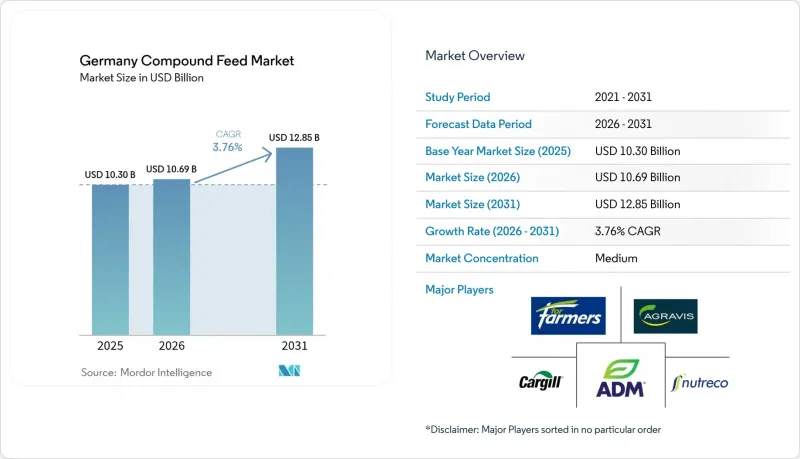
This report is Segmented by Animal Type (Ruminants, Poultry, Swine, Aquaculture, and Other Animal Types), by Ingredient (Cereals, Cakes and Meals, By-Products, and Supplements), and by Feed Form (Mash, Pellets, Crumbles, Extruded, and Other Forms). The Market Forecasts are Provided in Terms of Value (USD).
Germany Compound Feed Market Trends and Insights
High Demand for Animal Protein
According to preliminary data from the Federal Agricultural Information Center (BZL), average per capita meat consumption in Germany in 2024 was 53.2 kg, a slight increase from 52.8 kg in 2022 , demonstrating the resilience of protein demand despite plant-based diet trends. This consumption level, significantly above the global average, sustains robust feed demand across livestock sectors. The protein demand creates opportunities for premium feed formulations that enhance meat quality and production efficiency. German consumers increasingly prioritize meat quality over quantity, driving demand for feeds that support animal welfare standards and premium product positioning. Feed manufacturers respond by developing specialized nutrition programs that optimize protein conversion ratios and support higher-value meat production. The trend toward quality over volume consumption patterns favors sophisticated feed solutions that command premium pricing in the market.
Need to Improve Livestock Feed Efficiency
Margin pressure across German livestock operations accelerates the adoption of precision feeding technologies and enzyme supplementation to optimize feed conversion ratios. Modern German farms increasingly deploy AI-driven feeding systems that adjust rations in real-time based on animal performance data and environmental conditions. Cargill's EUR 200 million (USD 216 million) investment in converting its Krefeld plant from corn to wheat processing in June 2024 reflects industry shifts toward more efficient grain utilization. Feed efficiency gains of 3-5% through precision nutrition technologies translate directly to improved farm profitability and reduced environmental impact per unit of protein produced. The integration of enzyme technologies, particularly phytases and proteases, enables better nutrient utilization while reducing feed costs and environmental excretion.
Rising Consumer Shift Toward Plant-Based Diets
In Germany, according to a recent survey report, nearly 8 million people followed a vegetarian diet and 1.58 million people identified themselves as vegan in 2022. This dietary shift particularly impacts younger demographics and urban consumers, influencing long-term protein consumption patterns. Feed manufacturers respond by diversifying into plant-based protein ingredient supply chains and developing feeds for alternative protein production systems. The trend creates opportunities for feeds supporting higher-welfare, premium meat production that appeals to conscious consumers willing to pay premiums for quality over quantity. However, the overall impact reduces traditional feed volume growth and pressures commodity feed pricing in domestic markets.
Other drivers and restraints analyzed in the detailed report include:
- Expansion of Integrated Poultry And Swine Mega-Farms
- Government Incentives for On-Farm Feed Mills
- Volatile Grain and Oilseed Prices
For complete list of drivers and restraints, kindly check the Table Of Contents.
Segment Analysis
Poultry feed represented 40.65% of Germany compound feed market share in 2025, sustaining a leadership position due to integrated production systems and consistent consumer demand. The segment scales efficiently, encouraging investment in amino acid-optimized broiler diets and welfare-driven layer formulations. Swine feed follows, but faces policy headwinds that motivate precision-feeding adoption to maximize output per animal. Ruminant feed markets center on dairy cows, where methane-reducing additives gain momentum, while beef producers pivot toward grass-fed badges to capture premium channels.
Aquaculture feed posts the fastest expansion at a 6.55% CAGR between 2026 and 2031, elevating its contribution to Germany compound feed market size as freshwater trout and carp farms modernize. Marine-derived omega-3 alternatives, insect meals, and microbial proteins enter formulations to meet sustainability metrics. Specialty segments such as pet and equine feed remain niche but lucrative, relying on tailored nutrients and functional additives. Diversified animal-type demand mitigates risk and enhances resilience for the Germany compound feed industry.
Complete Report Scope:
- By Animal Type
- Ruminants
- Poultry
- Swine
- Aquaculture
- Other Animal Types
- By Ingredient
- Cereals
- Cakes and Meals
- By-products
- Supplements
- By Feed Form
- Mash
- Pellets
- Crumbles
- Extruded
- Other Forms
List of Companies Covered in this Report:
- Cargill Incorporated
- Archer Daniels Midland Company
- ForFarmers N.V.
- Nutreco N.V. (SHV Holdings)
- Agravis Raiffeisen AG
- BayWa Aktiengesellschaft
- Deutsche Tiernahrung Cremer GmbH & Co. KG
- Rothkotter Holding GmbH
- Broring Beteiligungs GmbH
- GS agri eG
- Royal Agrifirm Group U.A.
- AGRAVIS Raiffeisen AG
- Erbacher Group
- Alltech Inc.
- Charoen Pokphand Group Co., Ltd.
Additional Benefits:
- The market estimate (ME) sheet in Excel format
- 3 months of analyst support
TABLE OF CONTENTS
1 Introduction
- 1.1 Study Assumptions and Market Definition
- 1.2 Scope of the Study
2 Research Methodology
3 Executive Summary
4 Market Landscape
- 4.1 Market Overview
- 4.2 Market Drivers
- 4.2.1 High demand for animal protein
- 4.2.2 Need to improve livestock feed efficiency
- 4.2.3 Expansion of integrated poultry and swine mega-farms
- 4.2.4 Government incentives for on-farm feed mills
- 4.2.5 Emergence of carbon-neutral meat certifications
- 4.2.6 AI-driven precision-feeding adoption
- 4.3 Market Restraints
- 4.3.1 Rising consumer shift toward plant-based diets
- 4.3.2 Volatile grain and oilseed prices
- 4.3.3 Stricter phosphorus-runoff regulations
- 4.3.4 Shrinking livestock herd under Germany's animal-welfare roadmap
- 4.4 Regulatory Landscape
- 4.5 Technological Outlook
- 4.6 Porter's Five Forces Analysis
- 4.6.1 Bargaining Power of Suppliers
- 4.6.2 Bargaining Power of Buyers
- 4.6.3 Threat of New Entrants
- 4.6.4 Threat of Substitutes
- 4.6.5 Intensity of Competitive Rivalry
5 Market Size and Growth Forecasts (Value)
- 5.1 By Animal Type
- 5.1.1 Ruminants
- 5.1.2 Poultry
- 5.1.3 Swine
- 5.1.4 Aquaculture
- 5.1.5 Other Animal Types
- 5.2 By Ingredient
- 5.2.1 Cereals
- 5.2.2 Cakes and Meals
- 5.2.3 By-products
- 5.2.4 Supplements
- 5.3 By Feed Form
- 5.3.1 Mash
- 5.3.2 Pellets
- 5.3.3 Crumbles
- 5.3.4 Extruded
- 5.3.5 Other Forms
6 Competitive Landscape
- 6.1 Market Concentration
- 6.2 Strategic Moves
- 6.3 Market Share Analysis
- 6.4 Company Profiles (includes Global-level Overview, Market-level Overview, Core Segments, Financials as available, Strategic Information, Market Rank/Share for key companies, Products and Services, and Recent Developments)
- 6.4.1 Cargill Incorporated
- 6.4.2 Archer Daniels Midland Company
- 6.4.3 ForFarmers N.V.
- 6.4.4 Nutreco N.V. (SHV Holdings)
- 6.4.5 Agravis Raiffeisen AG
- 6.4.6 BayWa Aktiengesellschaft
- 6.4.7 Deutsche Tiernahrung Cremer GmbH & Co. KG
- 6.4.8 Rothkotter Holding GmbH
- 6.4.9 Broring Beteiligungs GmbH
- 6.4.10 GS agri eG
- 6.4.11 Royal Agrifirm Group U.A.
- 6.4.12 AGRAVIS Raiffeisen AG
- 6.4.13 Erbacher Group
- 6.4.14 Alltech Inc.
- 6.4.15 Charoen Pokphand Group Co., Ltd.
7 Market Opportunities and Future Outlook

