PUBLISHER: Mordor Intelligence | PRODUCT CODE: 2115138

PUBLISHER: Mordor Intelligence | PRODUCT CODE: 2115138
North America Luxury Goods - Market Share Analysis, Industry Trends & Statistics, Growth Forecasts (2026 - 2031)
According to Mordor Intelligence, the north american luxury goods market size was valued at USD 158.95 billion in 2025 and is estimated to grow from USD 163.48 billion in 2026 to USD 188.14 billion by 2031, at a CAGR of 2.85% during the forecast period (2026-2031).
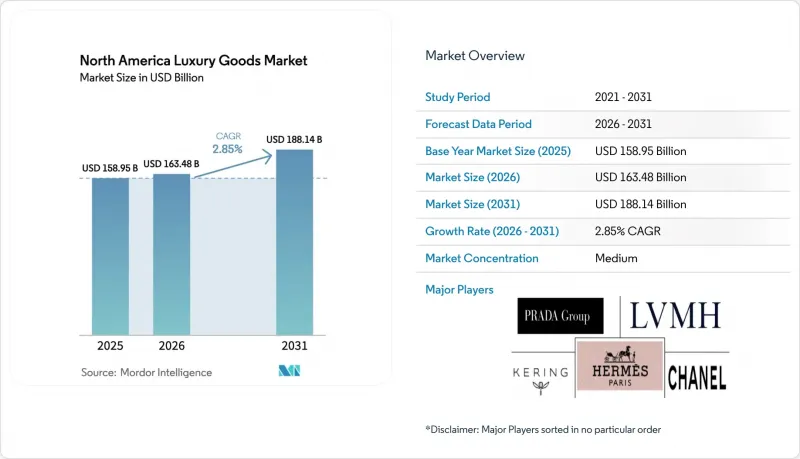
This report is Segmented by Product Type (Clothing and Apparel, Footwear, Jewelry, Watches, and More), End-User (Men, Women, and Unisex), Distribution Channel (Single-Brand Stores, Multi-Brand Stores, and More), and Geography (United States, Canada, Mexico, Rest of North America). The Market Forecasts are Provided in Terms of Value (USD).
North America Luxury Goods Market Trends and Insights
Brand Heritage Reinforcing Premium Perception
Heritage narratives justify price premiums that defy inflationary pressures. Hermes maintained double-digit revenue growth in North America through 2025 by anchoring each leather-goods launch in its 1837 saddlery origins, a tactic that converts waitlists into social currency. Chanel executed 8 to 10% price increases across handbags in 2024 without volume erosion, leveraging Coco Chanel's interwar legacy to frame each hike as a preservation of craft rather than margin expansion. Louis Vuitton's March 2025 collaboration with Swiss watchmaker Voutilainen, priced at EUR 550,000, sold out within hours, demonstrating that provenance-driven storytelling can command ultra-luxury premiums even in a cautious spending environment. This dynamic creates a moat: newer entrants lack the archival depth to justify similar markups, forcing them into volume-based strategies that erode perceived exclusivity.
Social Media Influence Boosting Brand Desirability
Instagram and TikTok drive discovery and purchase intent, particularly among consumers under 40. Luxury brands generated the majority of total earned media value across fashion categories in 2024, with influencer partnerships delivering measurable conversion rates that justify six-figure endorsement deals. Gucci's collaboration with Hot Wheels in early 2025, a limited-edition die-cast car priced at USD 120, garnered 2.3 million TikTok impressions within 48 hours, translating into a 14% uptick in website traffic for Gucci's accessories line. Brands that master short-form video and micro-influencer seeding capture younger cohorts before competitors can replicate the playbook.
Availability of Counterfeit Products
U.S. Customs and Border Protection seized counterfeit goods with a manufacturer's suggested retail price of USD 5.4 billion in fiscal 2024, with watches, handbags, and jewelry representing the top three categories . This volume erodes brand equity and diverts revenue, particularly in border states where cross-border smuggling routes remain active. Canada's Pacific Mall in Toronto has long been flagged for counterfeit sales, yet enforcement remains inconsistent; only 23% of Canadian retailers adopted the Retail Federation of America's authentication protocols by 2024, leaving gaps that sophisticated counterfeiters exploit. E-commerce platforms amplify the challenge: counterfeit listings often rank higher in search results than authorized sellers, confusing consumers and forcing brands to allocate legal budgets to takedown notices rather than product innovation. Mexico's placement on the Priority Watch List reflects persistent intellectual-property gaps under USMCA, delaying shipments and raising compliance costs for brands operating tri-national supply chains.
Other drivers and restraints analyzed in the detailed report include:
- High Demand from Inbound Tourists
- Luxury Seen as Status and Self-Expression
- Unregulated Resale Undermining Perceived Exclusivity
For complete list of drivers and restraints, kindly check the Table Of Contents.
Segment Analysis
Leather goods will expand at a 2.94% CAGR through 2031, the fastest among product categories, as brands integrate regenerative sourcing and circularity programs that resonate with sustainability-conscious buyers. Clothing and apparel held 34.55% of 2025 revenues, anchored by Chanel's tweed jackets and Ralph Lauren's tailored suiting, yet growth remains constrained by inventory cycles and markdown pressures in department-store channels. Footwear benefits from athleisure collaborations; Gucci's partnership with Adidas in 2025 sold out within hours, but faces margin compression as sneaker resale platforms normalize discounting. Eyewear and beauty each capture single-digit shares, though L'Oreal Luxe's Lancome and YSL Beauty lines posted double-digit North America growth in 2024, driven by prestige skincare and fragrance launches. Watches remain a high-value segment: Rolex increased production to 1.3 million units in 2024, shrinking waitlists and compressing secondary-market premiums, a tactical shift that underscores how even ultra-premium brands must balance exclusivity with volume. Jewelry benefits from bridal and gifting occasions, with Cartier and Van Cleef & Arpels maintaining pricing power through limited-edition collections and heritage storytelling.
Coach's partnership with Gen Phoenix to source regenerative leather material from ranches that sequester carbon exemplifies how product innovation can drive category leadership. The brand achieved Leather Working Group Gold certification for 95% of its tanneries, a credential that resonates with millennial and Generation Z buyers who scrutinize supply-chain transparency. Hermes piloted a leather-goods take-back program in select North American stores during 2024, refurbishing returned items for resale at 70% of the original price, a move that captures secondary-market margin while reinforcing brand stewardship. These initiatives suggest that leather goods will continue to outpace apparel and footwear, where sustainability claims remain harder to verify, and consumer skepticism runs higher.
Complete Report Scope:
- Product Type
- Clothing and Apparel
- Footwear
- Eyewear
- Leather Goods
- Jewelry
- Watches
- Beauty and Personal Care
- End-User
- Men
- Women
- Unisex
- Distribution Channel
- Single-Brand Stores
- Multi-Brand Stores
- Online Stores
- Geography
- United States
- Canada
- Mexico
- Rest of North America
List of Companies Covered in this Report:
- LVMH Moet Hennessy Louis Vuitton SE
- Hermes
- Kering
- Compagnie Financiere Richemont S.A.
- Chanel Limited
- The Estee Lauder Companies Inc.
- Rolex SA
- Prada S.p.A.
- Burberry Group plc
- Ralph Lauren Corporation
- Capri Holdings Limited
- L'Oreal Group (Luxe division)
- Shiseido Company, Limited
- The Swatch Group Ltd.
- Tapestry, Inc.
- Hudson's Bay Company
- Zino Davidoff SA
- Birks Group Inc.
- Salvatore Ferragamo S.p.A.
- Ferrari N.V.
Additional Benefits:
- The market estimate (ME) sheet in Excel format
- 3 months of analyst support
TABLE OF CONTENTS
1 INTRODUCTION
- 1.1 Study Assumptions and Market Definition
- 1.2 Scope of the Study
2 RESEARCH METHODOLOGY
3 EXECUTIVE SUMMARY
4 MARKET LANDSCAPE
- 4.1 Market Overview
- 4.2 Market Drivers
- 4.2.1 Brand heritage reinforcing premium perception
- 4.2.2 Social media influence boosting brand desirability
- 4.2.3 High Demand from Inbound Tourist
- 4.2.4 Luxury seen as status and self-expression
- 4.2.5 Rising online direct-to-consumer luxury engagement
- 4.2.6 Sustainability preferences shaping purchase decisions
- 4.3 Market Restraints
- 4.3.1 Availability of Counterfeit Products
- 4.3.2 Unregulated resale undermining perceived exclusivity
- 4.3.3 Stringent Government Regulations
- 4.3.4 Regulatory and tariff complexity hindering imports
- 4.4 Consumer Behaviour Analysis
- 4.5 Regulatory Outlook
- 4.6 Porter's Five Forces
- 4.6.1 Threat of New Entrants
- 4.6.2 Bargaining Power of Buyers
- 4.6.3 Bargaining Power of Suppliers
- 4.6.4 Threat of Substitutes
- 4.6.5 Competitive Rivalry
5 MARKET SIZE AND GROWTH FORECASTS (VALUE)
- 5.1 Product Type
- 5.1.1 Clothing and Apparel
- 5.1.2 Footwear
- 5.1.3 Eyewear
- 5.1.4 Leather Goods
- 5.1.5 Jewelry
- 5.1.6 Watches
- 5.1.7 Beauty and Personal Care
- 5.2 End-User
- 5.2.1 Men
- 5.2.2 Women
- 5.2.3 Unisex
- 5.3 Distribution Channel
- 5.3.1 Single-Brand Stores
- 5.3.2 Multi-Brand Stores
- 5.3.3 Online Stores
- 5.4 Geography
- 5.4.1 United States
- 5.4.2 Canada
- 5.4.3 Mexico
- 5.4.4 Rest of North America
6 COMPETITIVE LANDSCAPE
- 6.1 Market Concentration
- 6.2 Strategic Moves
- 6.3 Market Share Analysis
- 6.4 Company Profiles (includes Global level Overview, Market level overview, Core Segments, Financials as available, Strategic Information, Market Rank/Share for key companies, Products and Services, and Recent Developments)
- 6.4.1 LVMH Moet Hennessy Louis Vuitton SE
- 6.4.2 Hermes
- 6.4.3 Kering
- 6.4.4 Compagnie Financiere Richemont S.A.
- 6.4.5 Chanel Limited
- 6.4.6 The Estee Lauder Companies Inc.
- 6.4.7 Rolex SA
- 6.4.8 Prada S.p.A.
- 6.4.9 Burberry Group plc
- 6.4.10 Ralph Lauren Corporation
- 6.4.11 Capri Holdings Limited
- 6.4.12 L'Oreal Group (Luxe division)
- 6.4.13 Shiseido Company, Limited
- 6.4.14 The Swatch Group Ltd.
- 6.4.15 Tapestry, Inc.
- 6.4.16 Hudson's Bay Company
- 6.4.17 Zino Davidoff SA
- 6.4.18 Birks Group Inc.
- 6.4.19 Salvatore Ferragamo S.p.A.
- 6.4.20 Ferrari N.V.
7 MARKET OPPORTUNITIES AND FUTURE OUTLOOK

